Asphalt Maintenance Equipment: 9 Tools Crews Need in 2026

Every paving contractor has a story about the day their asphalt maintenance equipment cost them money: the kettle that wouldn't hold temperature, the blower that quit halfway across a lot, the plate compactor that left a lip along every patch edge.
So we went through the official spec sheets, manuals, and pricing pages for the machines that show up on crack sealing, patching, sealcoating, and striping jobs, then lined them up in the order a crew works: prep, rout, seal, patch, compact, coat, stripe.
Below are nine pieces of asphalt maintenance equipment worth building a crew around, what each one handles, what the manufacturer publishes for pricing, and the point where each machine stops earning its keep.
9 Best Asphalt Maintenance Equipment Picks: TL;DR
These run in job order, because that's how the money moves through a maintenance job:
- STIHL BR 800 C-E MAGNUM: Best for surface prep on commercial lots before anything else happens
- Crafco Model 30 Pavement Router: Best for cutting a clean sealant reservoir on longitudinal and transverse cracks
- Crafco Super Shot 125: Best for crews sealing thousands of pounds of hot-pour sealant a week
- Falcon 2-Ton Hot Box Trailer: Best for patch crews who lose mix to cooling before they can place it
- KM International KM 4-40: Best for reheating and reworking existing asphalt on localized failures
- Wacker Neuson WP1550AW: Best for compacting utility cuts, small patches, and tight edges
- Wacker Neuson RD12: Best for parking lots, secondary roads, and repair work that outgrows a plate
- SealMaster TR 575 SprayMaster: Best for commercial sealcoating production with sand-loaded material
- Graco LineLazer V 3900: Best for restriping the lot you just coated without subbing out the striping
How We Picked This Asphalt Maintenance Equipment
We built this list from manufacturer documentation: official spec pages, operator manuals, brochure PDFs, and whatever each company publishes about price, financing, or quote requests. Where a manufacturer stays quiet on cost, we say so instead of guessing.
Nothing here comes off a resale listing or an auction result. Equipment cost ends up as a line item in every bid you send, so a wrong figure loaded into your asphalt bidding platform gets repeated on every job you price.
Five things decide whether a machine made the cut:
- Fit with the workflow: whether the machine handles a step crews perform on almost every maintenance job, from prep through the final stripe, rather than a specialty service you sell twice a year
- Crew reality: loading heights, control layout, and how fast a green operator gets productive, since a roller only pays off with real roller operator training behind the seat
- Serviceability: parts availability, published manuals, and how much of the machine your own mechanic can fix in the yard on a Saturday morning without waiting on a service call
- Cost transparency: published pricing, published financing terms, or at minimum a quote path the manufacturer runs itself or through its authorized dealers
- Material math: how the machine affects the numbers you already track, from sealant consumption to asphalt yield on patch work
Plenty of good machines missed the list on purpose. Truck-mounted infrared units like the Ray-Tech TMV line start at $109,995 before the truck chassis and fit a municipal fleet budget far more comfortably than a five-person crew's.
Chip spreaders got cut too, since chip seal lands mostly on large roads and highways, so commercial lot crews rarely touch it.
Asphalt Maintenance Equipment: Quick Comparison
Here's the whole lineup side by side:
1. STIHL BR 800 C-E MAGNUM: Best for Surface Prep and Blowing Out Cracks
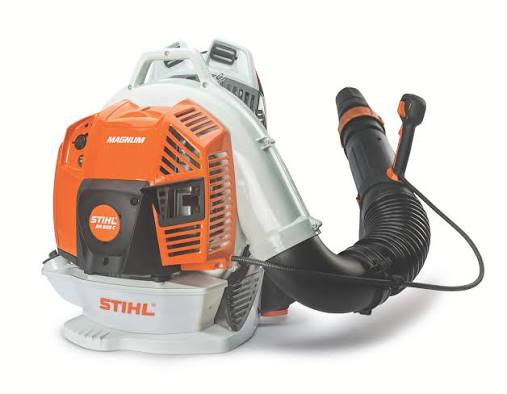
What it does: STIHL's BR 800 C-E MAGNUM clears debris and dust off the pavement before sealant, patch material, or coating goes down.
Best for: Every crew that needs dry, clean pavement without introducing water.
Prep decides whether your sealant sticks, and asphalt crews don't power wash a surface to get there. Blowers, brooms, and wire brushes do the work, because water in a crack ruins the bond you're about to pay for.
Dust control belongs in the conversation too, alongside the burn, fume, and heat practices in your crew's asphalt safety routine before the season starts.
Key features
- Multi-function control handle: keeps the throttle trigger lock, stop switch, and other controls in one place so the operator's hand never has to leave it
- Side-mounted starting handle: lets the operator restart the engine without taking the unit off
- Telescoping blower tube: adjusts to operator height without tools, cutting the fatigue that shows up in hour six
- STIHL Easy2Start system: cuts out the strong pull on the starter cord
Pros
- Published price, so you can budget it without chasing a rep
- STIHL's most powerful gas backpack blower, rated at 41 N of blowing force with the round nozzle
- Parts and service run through STIHL dealers
Cons
- STIHL notes the BR 800 C-E MAGNUM isn't available for purchase or delivery in California
- Backpack blowers wear out operators on big lots, where a walk-behind or self-propelled unit finishes faster
Pricing
STIHL lists the BR 800 C-E MAGNUM at a regular price of $749.99 on its official product page. Pricing at authorized STIHL dealers may differ from the website price.
Bottom line
This is the cheapest machine on the list and the one that touches every job. A second unit keeps prep moving when the first one goes down.
2. Crafco Model 30 Pavement Router: Best for Prepping Cracks Before You Seal
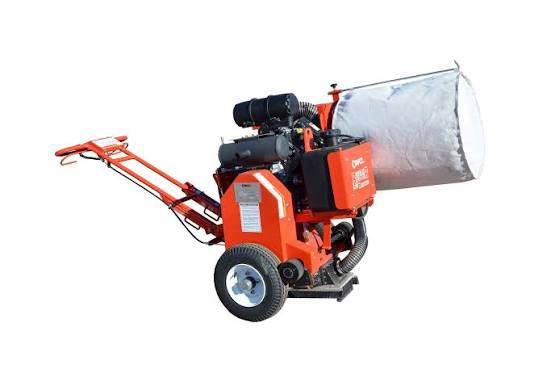
What it does: Crafco's Model 30 Pavement Router cuts a uniform reservoir along a crack so hot-pour sealant sits deep enough to flex with the pavement through a freeze cycle.
Best for: Contractors bidding crack sealing work with a performance expectation attached to it.
Crafco calls its three-step method (rout, clean, seal) the industry standard.
Routing takes extra time up front and buys back sealant life later, since sealant poured into an unprepared crack has nowhere to go.
Key features
- 25 hp Honda engine with electronic fuel injection: starts easily and runs with better fuel efficiency
- Quarter-inch welded steel chassis: a heavy frame that also carries an adjustable ergonomic handle
- Carbide skid plate and metal guards: protect the fuel tank and belt system from the debris routing throws
- Tuned center of balance: helps the operator follow a wandering crack without fighting the machine
Pros
- Crafco cites a 1999 FHWA study showing 7.9 years of sealant service life for a routed crack against 3.7 years for a non-routed one
- Crafco publishes manuals and bid specs, so agency work is easier to spec and defend
- Cutting depth is set with an electric switch on the handle, and a depth indicator confirms proper routing
Cons
- Routing kicks up silica dust, and OSHA's construction silica standard requires dust controls and exposure limits you'll need to plan around
- Adds a machine, a trailer slot, and a labor step to jobs that some competitors will bid without it
Pricing
Crafco doesn't publish list pricing on routers. Quotes run through Crafco reps and authorized distributors on the company's purchase page, and financing comes through a third-party lender listed on its financing page.
Bottom line
The Model 30 is the pick for any contractor whose crack sealing gets inspected or warrantied. If you only seal a few small jobs a season, rent one and skip the trailer space. Dust control is a real cost here, and Crafco sells an optional Dust Control system, new or as a retrofit kit, so price it into the job the way you price sealant.
3. Crafco Super Shot 125: Best for High-Volume Crack Sealing
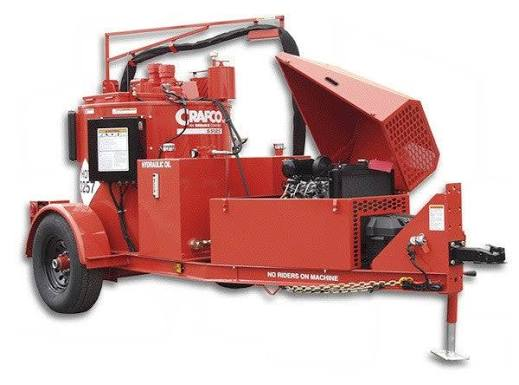
What it does: Crafco's Super Shot 125 melts and applies hot-pour crack sealant from one trailer, feeding a heated hose and wand that keep material moving.
Best for: Crews running crack sealing as their own revenue line.
The 125 sits in the middle of Crafco's Super Shot family, and Crafco points crews that work city streets to the 125 or the 250. Crafco's own specs put the 125D at a 1,064 lb/hr melt rate with a 133-gallon material capacity.
Key features
- True on-demand pumping: the pump only runs when the operator squeezes the wand, cutting material waste and pump wear
- Double-boiler tank: circulates heat transfer oil around the material so sealant doesn't scorch against a hot wall
- Push-button startup with digital controls: helps a crew learn the machine quickly
- Optional 100 CFM air compressor: runs an air lance that clears dirt and debris from cracks as the crew moves along
Pros
- Crafco rents Super Shot melters, so you can try one on real jobs first
- Heated hose and wand cut the clogs and stops that eat a pour-pot crew's day
- Crafco has been building this line since 1996
Cons
- Sealant has to heat up before work starts, so warm-up time comes out of the crew's day
- Diesel-fired melters need daily oil and hydraulic fluid checks before the burner starts
Pricing
Crafco routes melter pricing through its representatives, with no public price list. Start on the Crafco purchase page for a quote, and check the financing page if you'd rather spread the cost across seasons.
Bottom line
For contractors sealing every week through the season, the 125 is the safe pick in the family. Crafco steers small-lot crews to the Super Shot 60 or the more compact EZ Pour 50, and highway crews should price the 250.
4. Falcon 2-Ton Hot Box Trailer: Best for Keeping Hot Mix Workable All Day
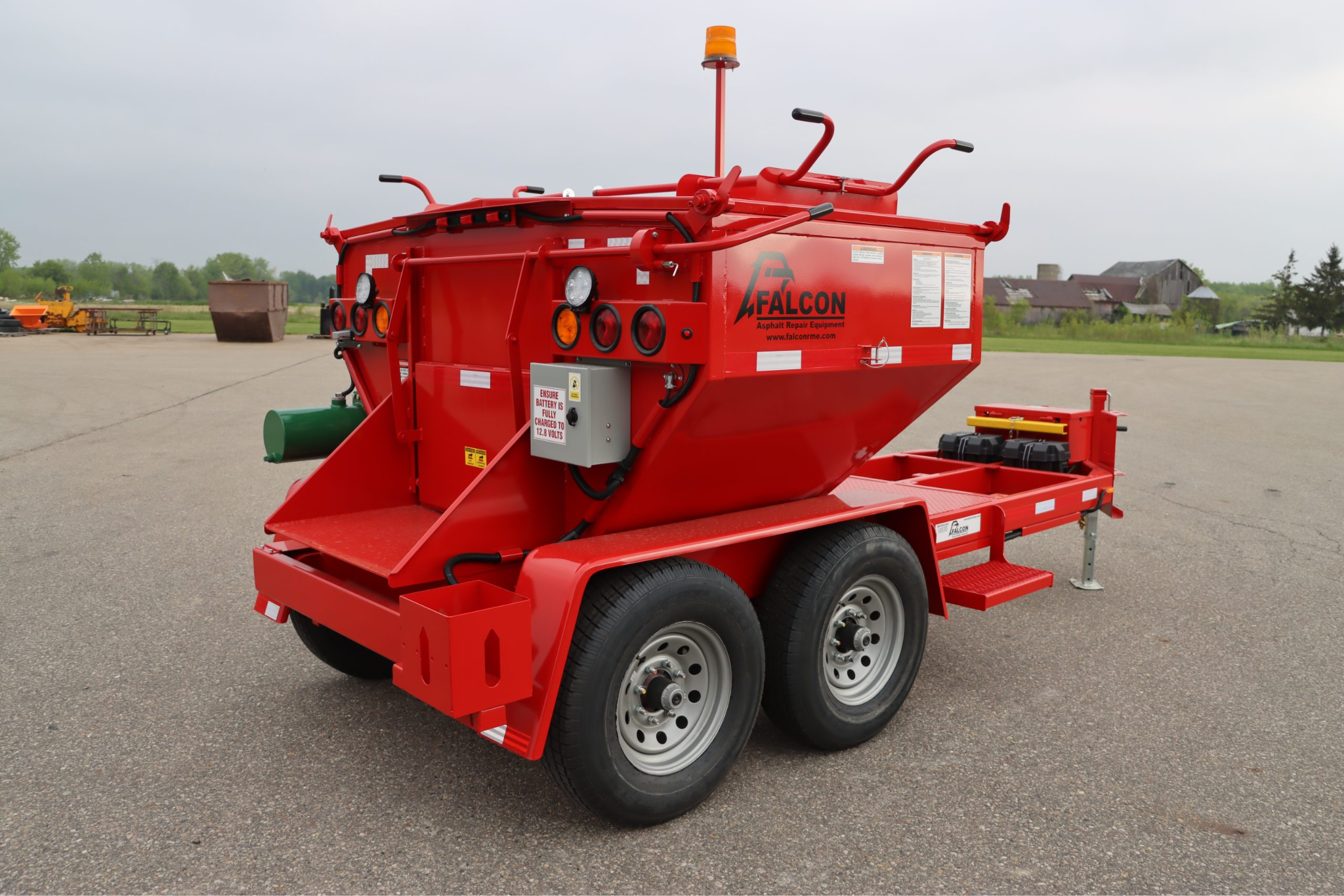
What it does: Falcon's 2-Ton Asphalt Hot Box Trailer holds hot mix at working temperature with a built-in burner, through the day and overnight if the crew needs it.
Best for: Patch crews chasing potholes and localized failures across scattered addresses.
Patching means cleaning the damaged area, squaring it up when the failure calls for it, filling it with hot mix, cold patch, or a repair product, and compacting the fill. Hot mix only works if it's still hot when you get there.
Key features
- Built-in diesel or vapor draw propane burner: holds mix at working temperature through the day and overnight
- Under 10,000 lb GVWR: Falcon says workers don't need a special license to operate it
- Low shovel height: crews pull material from waist height, which saves backs across a long patch day
- Optional 30-gallon tack tank and compactor basket: put tack coat and a plate compactor on the same trailer
Pros
- Per Falcon, roughly 25% of hot mix cools before crews can place it, and keeping the mix heated is how you cut that waste
- Its small footprint gets around tight areas like cramped streets
- With a 2-ton box, you skip the dump truck and tow the trailer behind a truck rated for its weight, shovels and tools on board
Cons
- Two tons runs out fast on a big pothole route, and a 4-ton or 6-ton box holds more and refills less often
- The burner adds fuel and a charged 12-volt battery to the daily checklist
Pricing
Falcon publishes specs and options but no prices. The company runs a quote request form and demo requests through its site, plus cooperative purchasing contracts for public agencies.
Bottom line
If your crews patch year-round, this pays for itself in material you stop throwing away. Contractors patching a handful of times a season can rent a box and keep the capital for the service they sell most.
5. KM International KM 4-40: Best for Infrared Repairs on Localized Failures
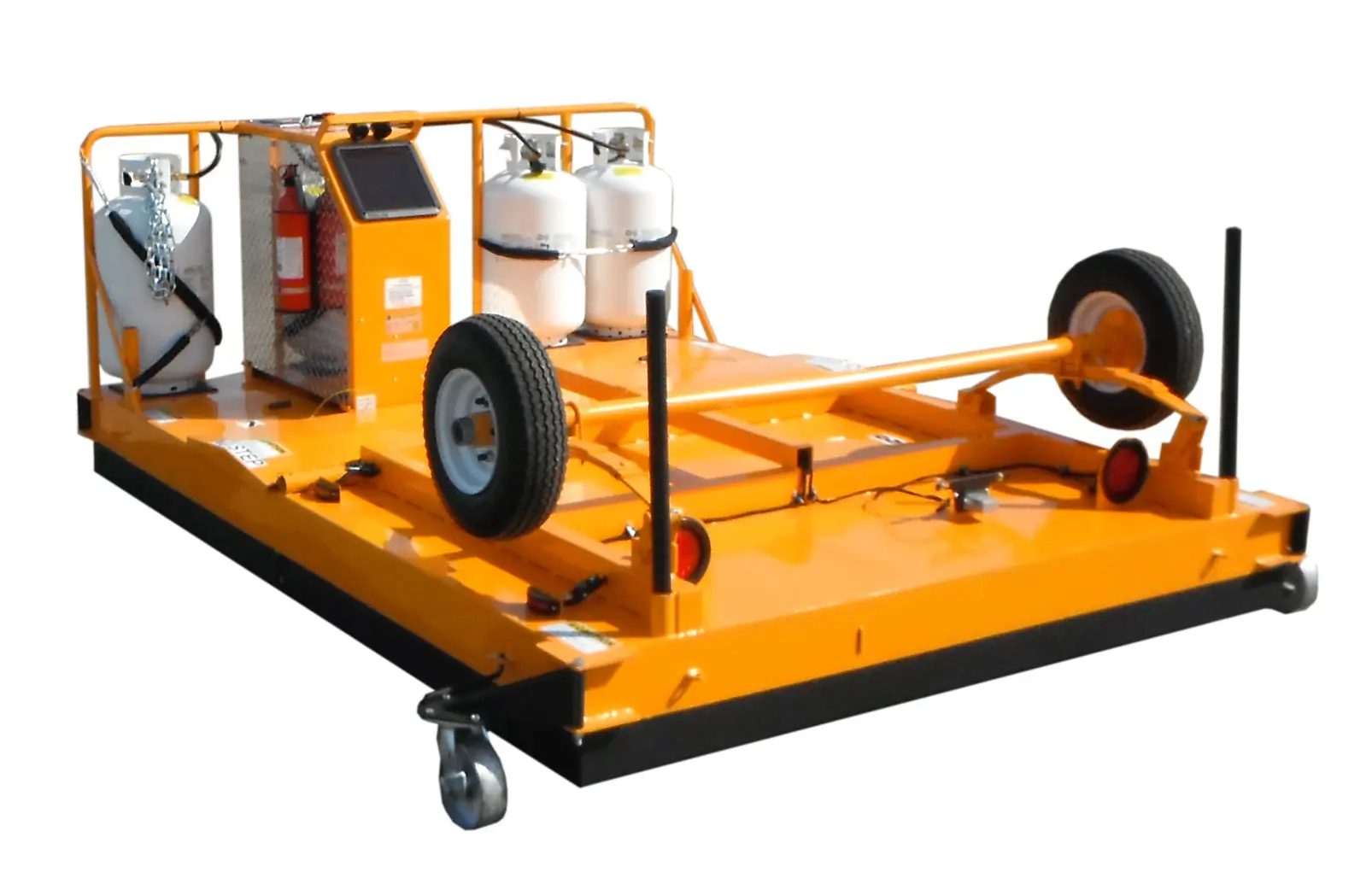
What it does: KM International's KM 4-40 reheats existing asphalt for in-place repairs and blends the repair into the surrounding pavement.
Best for: Contractors fixing surface defects, birdbaths, and failed patches on lots where appearance sells the job.
Infrared repair solves a problem that patching creates: the joint between old and new asphalt. Heat the existing surface, rake it, add mix, compact it, and the repair bonds to pavement that's already there.
Key features
- Four independent heating zones covering 40 sq ft: heat a wide repair or a narrow strip without wasting fuel on empty pavement
- 700,000 BTU output: the figure to compare when you line the 4-40 up against other infrared heaters
- Self-trailering design: folds into a single-axle towable unit at 810 lbs
- Four swivel casters: keep it maneuverable around a repair area
Pros
- Repairs blend into the surrounding surface, so a lot stops reading like a map of past repairs
- KM publishes full specs and a library of infrared repair guides on the product page
- KM lists financing on its site with monthly payments for the 4-40 as low as $339, based on 60-month leases from third-party lenders
Cons
- Infrared is a poor fit where the base has failed, since the heat reaches only about 1.5 to 2 inches into the asphalt, so structural failures still need a saw-cut and full-depth patch
- Runs on propane, so crews have to keep cylinders filled and on hand for every job
Pricing
KM International directs pricing to its distributor network and the inquiry form on the KM 4-40 page, next to the financing figure. Reach the company through its contact page for a quote.
Bottom line
Infrared earns its place on lots where the customer notices patch lines, and it pairs naturally with a hot box crew. Skip it if your work is mostly full-depth repair and new construction.
6. Wacker Neuson WP1550AW: Best for Compacting Patches and Tight Spaces
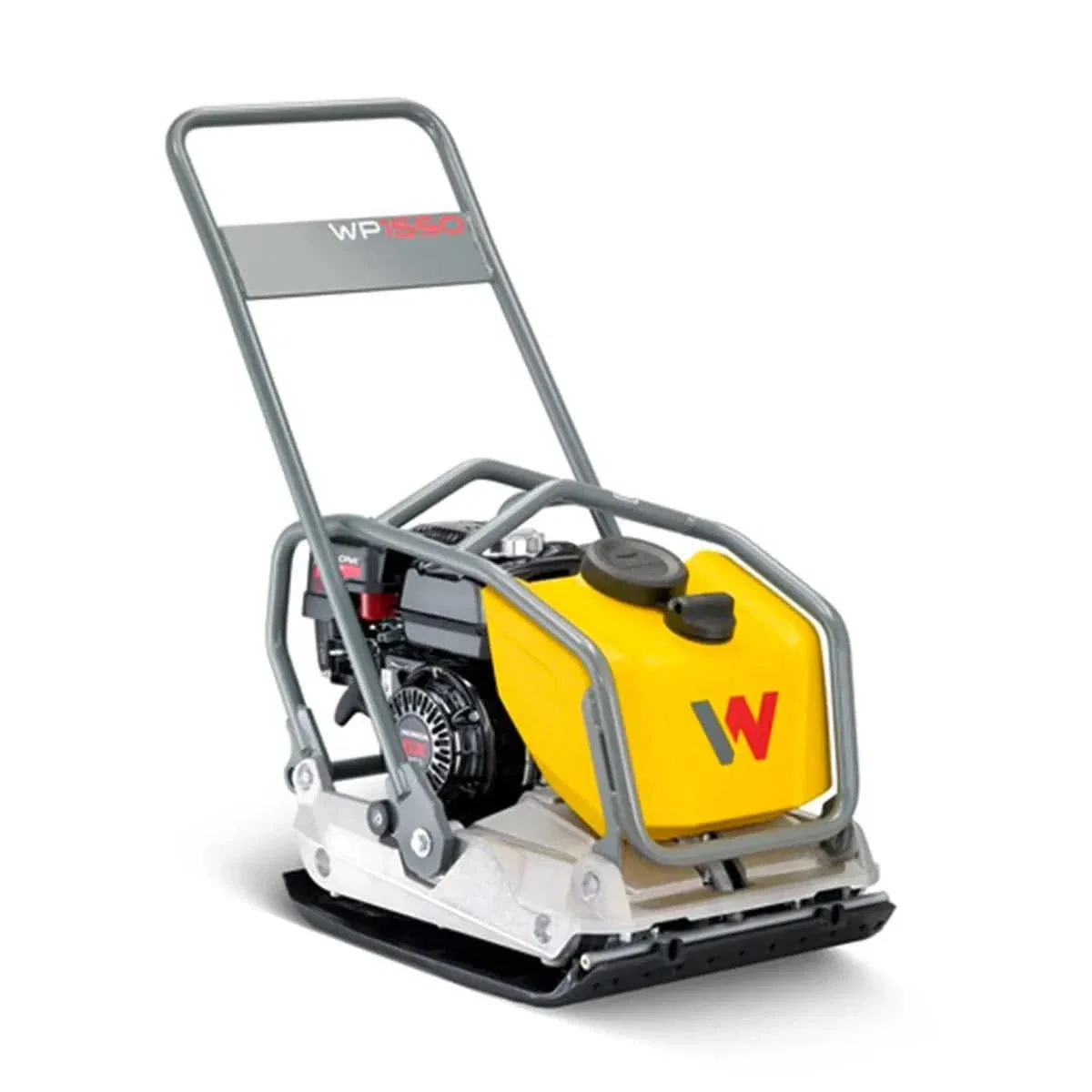
What it does: Wacker Neuson's WP series plates compact asphalt and light mixed soils in the spots a roller can't reach.
Best for: Utility cuts, small patches, walkway repairs, and compaction along edges.
Wacker Neuson positions the WP line for professional use on subbases, walkways, roads, parking lots, and asphalt finishes.
Key features
- Water tank on the WP1550AW: wets the plate so hot asphalt releases cleanly
- Center-mounted control handle: lets the operator steer and turn inside a confined patch
- Shaped base plate with rounded edges: minimizes material buildup when turning the plate
- Optional wheel set: rolls the plate across a site so nobody carries it
Pros
- Handles the small compaction work that makes up most maintenance patching
- A sturdy housing protects the V-belt, and the belt is easy to tension
- Wacker Neuson's dealer network covers parts and service
Cons
- It travels forward only, so the operator turns it around at the end of each pass
- A plate can't deliver the finish a roller gives on anything larger than a small patch
Pricing
Wacker Neuson doesn't publish plate compactor pricing. Quotes come through the dealer network and the product inquiry form on the official WP series page.
Bottom line
Every patch crew needs a plate, and the WP line suits a truck that gets used hard. If most of your compaction happens on open lots, a roller covers more of it, and the plate handles utility cuts and edges.
7. Wacker Neuson RD12: Best for Parking Lot Patches and Small Overlays
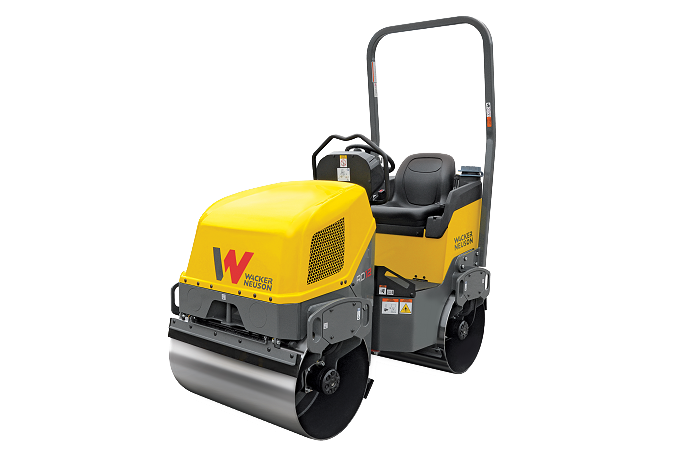
What it does: Wacker Neuson's RD12 tandem roller (sold in the US as the RD12A-90, in fixed-ROPS, foldable-ROPS, and Premium versions) compacts asphalt and granular subbase with a vibrating front drum and a static rear drum on a machine small enough for lot work.
Best for: Parking lots, driveways, secondary roads, and repair work where a plate leaves too rough a finish.
That's most of Wacker Neuson's list of primary applications for the RD12, and it reads like a maintenance contractor's week. Articulated steering and dual drum drive are what let it work a lot full of islands and curb lines.
Key features
- Dual drum drive with articulated steering: gives the machine excellent maneuverability, and both drums turn at the same speed to avoid shoving the asphalt
- Side clearance under two inches: lets the operator maneuver close to curbs and structures
- Ergonomic operator platform: lockable metal floorplate, all-weather seat, and fuel and water gauges
- Accessible tie-down points: the operator loads and secures the machine without climbing onto the trailer
Pros
- Finish quality on patches and small overlays gives you a smooth, even mat across the whole lot
- Tapered frame and hood give the operator a clear view of the drum edges
- Designed and built in the US, with Wacker Neuson parts support behind it
Cons
- Moving it between jobs takes a trailer and a tow vehicle, which adds setup to small patch days
- An untrained operator can leave roller marks, over-compact edges, or push a mat, so seat time shows up in the finished surface
Pricing
Wacker Neuson handles roller pricing through dealers. The official RD12 page includes a product inquiry form and a dealer locator, and the company's Finance & Current Offers page covers financing programs.
Bottom line
Finance the RD12 once lot work drives your revenue, because compaction quality shows up in every callback conversation. Crews doing mostly crack sealing and sealcoating can rent a roller for the few overlay days they book.
8. SealMaster TR 575 SprayMaster: Best for Production Sealcoating
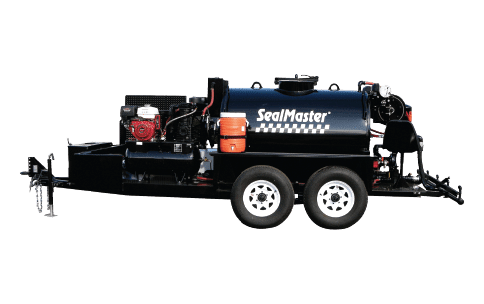
What it does: SealMaster's TR 575 SprayMaster mixes and sprays pavement sealer with or without sand from a 575-gallon trailer-mounted tank.
Best for: Contractors sealcoating commercial and municipal lots as a core service.
Sealcoating protects asphalt mainly from UV degradation and oxidation, and it does little against water unless the cracks get sealed first. That sequencing is why a sealcoat rig comes after a crack sealing setup in your buying order.
Key features
- 575-gallon capacity with 750- and 1,000-gallon siblings: lets you match tank size to your typical lot, so refills stop dictating the schedule
- Full-sweep hydraulic agitation: keeps material properly mixed to prevent separation
- Dual diaphragm pump: the 2-inch air-driven pump handles heavy sand loads without clogging
- Optional extended deck: adds room for transporting tools, materials, and equipment to the jobsite
Pros
- SealMaster's nationwide dealer network supports each trailer with parts availability, service, and local expertise
- Rides on a heavy-duty trailer with dual 6,000 lb axles, so there's no truck-mounted install to commit to
- SealMaster runs equipment rental programs, so you can rent a rig before you buy one
Cons
- Sealcoating equipment sits idle in cold and wet weather, so utilization drops hard outside the season
- Sealer rules vary by location, and Minnesota bans coal tar sealants outright, so check what you can spray before you load the tank
Pricing
SealMaster publishes specs, manuals, and catalog pages but handles pricing on request through its equipment form or a SealMaster representative, and the TR 575 page links to financing options. Find the nearest site on the SealMaster locations page.
Bottom line
As a rough rule, if sealcoating is more than a quarter of your revenue, own the rig and control your own schedule. Below that, subcontracting keeps a seasonal asset off your books.
9. Graco LineLazer V 3900: Best for Restriping Lots After Sealcoat
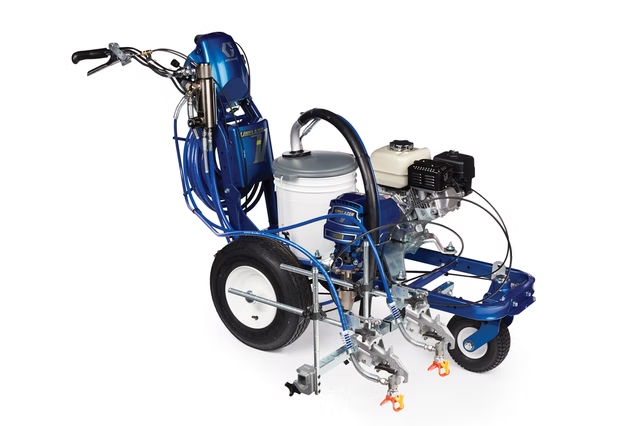
What it does: Graco's LineLazer V 3900 sprays traffic paint through one or two guns for parking lot restriping.
Best for: Sealcoating contractors who currently sub out striping and want the margin back.
Striping is the last thing the customer sees, which makes it the part they judge. Graco positions the Standard Series for higher-production restriping contractors taking on larger jobs with basic, single-color patterns.
Key features
- LiveLook display with SmartControl: tracks, measures, and controls every aspect of the job at a glance
- J-Log system with USB download: exports proof-of-job data for your records
- Honda GX engine: a familiar powerplant any small engine shop can service
- EasyMark gun adjustment: gives consistent gun alignment with an easy-to-use guide-mark system
Pros
- Bringing striping in-house captures margin you currently hand to a sub
- The QuikSelect gun selector controls both guns independently with one lever
- Graco backs the 3900 with its distributor network for sales and service
Cons
- Both guns are manual, so the operator triggers every line by hand
- Layout work is a skill, and a crew's first few lots will take longer than the bid assumed
Pricing
Graco routes pricing through distributors. The official 17H450 product page includes Find a Distributor, Contact Sales, and Ask an Expert options, and Graco takes demo requests on its Request a Demonstration page.
Bottom line
Add a striper once sealcoating fills your schedule, since striping is the natural follow-on to a fresh sealcoat. Crews without steady sealcoat volume should keep subbing it out.
Hand Tools Every Asphalt Maintenance Crew Carries
The nine machines above handle the heavy work, but hand tools finish the spots a machine can't reach.
Most crews keep these on every truck:
- Hot air lance: blows hot compressed air into cracks to clear out debris, dry out moisture, and warm the pavement so sealant bonds better
- Wire scraper brush and asphalt scraper: scrape loose debris and oil spots from the surface so sealer sticks
- Asphalt rake and lute: pull hot asphalt out of a hot box or from under an infrared heater, then spread and smooth it to an even depth
- Hand tamper: packs loose mix into potholes and corners where a plate compactor won't fit
- Sealcoat squeegees and brushes: work sealer by hand along edges and into small areas where setting up the spray rig isn't worth it
Which Asphalt Maintenance Equipment Should You Buy First?
Buy in the order the work happens, and buy the machine that unlocks a service you can sell tomorrow. Three pieces of asphalt maintenance equipment carry most crews through their first few seasons.
Choose the STIHL BR 800 C-E MAGNUM if you:
- Need one purchase that improves every job you already run
- Want a published price you can drop into a budget without a quote
- Have crews prepping surfaces by hand and losing an hour on every lot
Choose the Crafco Super Shot 125 if you:
- Sell crack sealing as a standalone service
- Run enough volume to justify a trailer and a dedicated two-person crew
- Keep losing days to pour-pot production on jobs you bid tight
Choose the Falcon 2-Ton Hot Box Trailer if you:
- Patch across scattered addresses on a route
- Throw away leftover mix that went cold before you could use it
- Want to run patch work from a towed box instead of tying up a dump truck
Skip buying equipment entirely if:
- You run fewer than a dozen maintenance jobs a season, where rental beats ownership
- Your crews haven't had seat time on the machine yet, since a new roller with a green operator costs more than a rental and a training day
- Your cash is better spent on the truck, trailer, or estimating process that's holding up your bids
Final Verdict
The best asphalt maintenance equipment for your crew depends on which service you're selling next season.
Crack sealing gear pays back fastest for most contractors, because the work exists on every lot you already service.
Compaction equipment is the bigger commitment, and the RD12 is the strongest buy if lot repairs and small overlays fill your calendar.
Only STIHL puts a price on its product page. Several others post financing details, but every other machine here is priced through a rep or a dealer quote.
Stop Scheduling Asphalt Maintenance Equipment on Spreadsheets
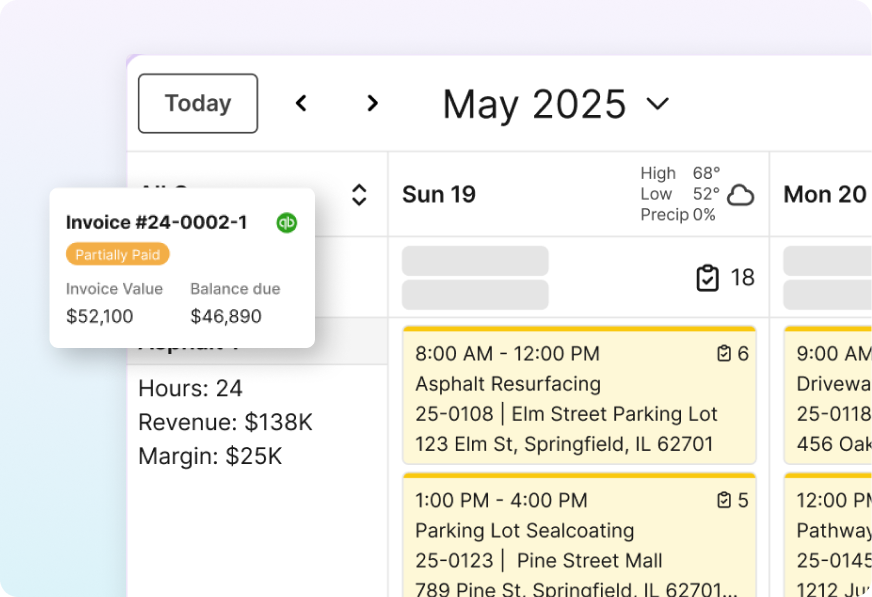
OneCrew is a platform built specifically for commercial, project-based asphalt and concrete paving contractors, and it ties your maintenance operation together from the first site measurement to the final payment.
Here's what it covers:
- Price equipment-heavy jobs on margin from an accurate takeoff: OneCrew's estimating tools let you measure a job from satellite images, or run a plan takeoff from uploaded blueprints as a separate add-on, then turn the drawing into an estimate with tonnage, materials, and truck counts calculated for you.
- Schedule your crack crew, your patch crew, and your sealcoat rig without double-booking any of them: OneCrew's scheduling feature assigns crews and equipment to individual services and splits multi-phase jobs across crews and weeks so your office and field stay aligned from the first phase to the last.
- Put work orders, site addresses, and equipment assignments on your crew's phones before they leave the yard: The field management tools push mobile work orders, job details, and GPS directions to crew phones and pull time, quantities, and photos back to the office as each stop closes out.
- Send proposals that spell out the services, measurements, and pricing before anyone touches a machine: OneCrew's proposal feature generates professional, branded proposals directly from your estimate.
- Track every maintenance account so no re-seal or follow-up inspection slips through: OneCrew's CRM keeps accounts, contacts, and job sites as their own records, so each property's work history stays with the site, and you can set reminders on any contact.
- Invoice when the job wraps and sync to QuickBooks without double entry: OneCrew's invoicing tools generate invoices from the line items already in the platform and sync them and their payments with QuickBooks in both directions.
Your equipment is the big spend, and your process sets what each job earns. OneCrew helps cut estimating time by 75%. Book a demo and see how paving contractors run estimating, scheduling, and billing in one platform from takeoff to final invoice.
FAQs
What is asphalt maintenance equipment?
Asphalt maintenance equipment is the machinery crews use to repair and protect existing pavement: blowers and routers for prep, melters for crack sealing, hot boxes and infrared heaters for patching, plates and rollers for compaction, and sprayers and stripers for sealcoating and line marking.
What maintenance does asphalt need?
Asphalt needs crack sealing, patching, sealcoating, and restriping. Crews usually work in that order, sealing cracks and fixing failed spots before the coat and stripes go down.
What asphalt maintenance equipment does a new crew need first?
Start with a commercial blower, a crack sealing melter, and a hot box, which cover prep, crack sealing, and patching. Add rollers, sealcoat rigs, and infrared units once one service line has steady volume.
How much does asphalt maintenance equipment cost?
It runs from under $1,000 for a commercial blower to more than $100,000 for a truck-mounted infrared rig. Most of it is quote-only, and among the nine picks, STIHL is the only manufacturer with a list price: $749.99 for the BR 800 C-E MAGNUM.
Should you rent or buy asphalt maintenance equipment?
Rent when a machine supports fewer than about a dozen jobs a season, and buy when it supports a service you sell every week. Rental rates on a roller or melter add up fast once you're using one most weeks.
Does sealcoating equipment replace crack sealing equipment?
No. Sealcoat shields the surface from sun and oxidation but won't keep water out of open cracks, so crack sealing comes first.