7 Best Cold Patch Asphalt Products for Contractors (2026)

Cold patch asphalt is a ready-to-use asphalt mix that goes into a hole without heating. Every bag of cold patch looks identical on the pallet. The difference shows up in February, when you're standing over a water-filled pothole in a client's lot and the material either grabs or crumbles. The best cold patch asphalt is whichever one still works on that day.
So we went through the technical data sheets, published specifications, and DOT approvals behind the products paving crews keep on the truck, then checked those claims against the federal pothole-repair research.
Below, seven products go head-to-head on workability, wet-hole performance, stockpile life, and how each is packaged, sold, and priced.
7 Best Cold Patch Asphalt Products: TL;DR
- UPM Cold Mix: Best for year-round patching with a season-matched mix
- EZ Street Cold Asphalt: Best for potholes with standing water in them
- Perma-Patch Regular Mix: Best for thin skin patches and utility cuts
- QPR High Performance Cold Mix: Best for bulk stockpiling through winter
- Aquaphalt 6.0: Best for schools, bridge decks, and runways
- Crafco HP ER Cold Patch: Best for all-season patching with a gray concrete option
- Sakrete U.S. Cold Patch: Best for small repairs and recycled content
How We Compared the Best Cold Patch Asphalt Products
We pulled the technical data sheet, safety data sheet, and published specification for every product here, then checked those numbers against field research, from the FHWA's long-running pothole experiment to recent state DOT studies.
That federal experiment, SHRP H-106, placed 1,250 cold-mix patches at eight sites across the United States and Canada starting in 1991, and FHWA's 1998 final report found that 56% were still in service at the final round of monitoring.
Later reviews of that data back the plain throw-and-roll method: a 2024 New Jersey DOT report recommends it over the labor-heavy semipermanent procedure for winter repairs, since semipermanent patching takes more time, labor, and equipment for lower productivity.
Newer work points the same way: an Ohio DOT study of 686 winter patches (2022) found UPM among the best performers in throw-and-roll repairs. The New Jersey report's lab testing also found that once commercial cold mixes cure, they end up stronger than generic bulk cold mix, though only one of the two it tested also bonded better to the hole.
We left out generic yard cold mix and the squeeze-tube repair kits. Yard mix works as a temporary plug, though you can't put a repair line item in front of a property manager on material that ravels by spring.
Here's what we graded each product on:
- Workability range: the temperature band where the mix stays shovel-ready and doesn't set up in the bag
- Wet-hole performance: whether the material bonds in standing water or needs a dry, blown-out hole first
- Stockpile and shelf life: how long a pallet or an uncovered pile survives in your yard
- Compaction and traffic: how fast the patch takes traffic, and what it takes to reach density, which is where trained roller operators pay for themselves
- Packaging and availability: pails, bags, super sacks, or bulk tons, plus how quickly you can restock mid-season
- Cost and buying: packaging, how pricing works, and how long a patch holds before a callback
A 2021 Illinois Center for Transportation study explains why mix quality matters: throw-and-roll with poor material costs more in the long run, because the same potholes need repairing again and again, which changes how you price a patching line item in your asphalt bidding platform.
7 Best Cold Patch Asphalt Products: Quick Comparison
1. UPM Cold Mix: Best for Year-Round Patching With a Season-Matched Mix
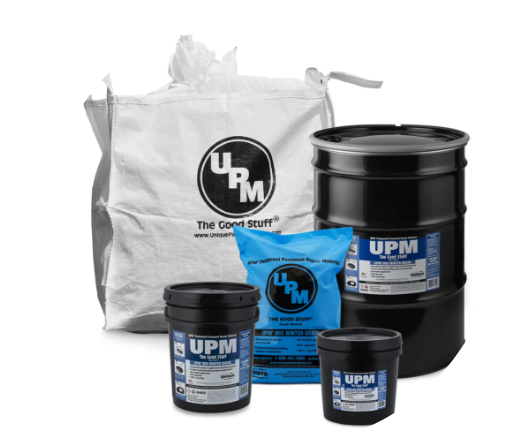
What it does: UPM Cold Mix from UNIQUE Paving Materials is a commercial-grade cold patch that ships in a formula matched to the temperature you're working in.
Best for: Commercial paving contractors who patch in all four seasons and buy by the bag, super sack, or ton.
UPM sells winter, spring/fall, and summer grades, so the mix you shovel in January is formulated to stay as workable as the grade you use in July.
Pair that with a quick run through our asphalt tonnage calculator before you load, and a patch route stops turning into three trips to the yard.
Key features
- Season-specific grades: winter mix stays workable at 40°F and below, spring/fall covers 40°F to 80°F, and summer mix handles 80°F and above
- Region-specific blends: UNIQUE's lab designs custom formulations around local aggregate and conditions, so yards in different parts of the country can get different material
- No primer or tack coat: sweep out debris, shovel it in, level it 25% high, compact it, and open the area to traffic
- Packaging from truck to stockpile: 24 lb and 60 lb pails, 50 lb bags, 660 lb drums, 2,000 lb super sacks, and bulk tons
- Written replacement guarantee: UNIQUE guarantees the winter grade stays workable in freezing temperatures or replaces it
Pros
- Seasonal and regional grades take the guesswork out of cold-weather patching, which is exactly when patch failures get expensive
- The packaging range covers a two-bag service call and a 20-ton stockpile without switching brands
- A free pothole calculator on their site sizes the order before you buy, so a small crew stops over-ordering
- More than 60 years of commercial supply history behind the material
Cons
- You have to track which seasonal grade is in the yard, and grabbing the wrong one costs you workability on site
- Sealcoating over a fresh UPM patch means waiting at least 30 days, and they'd rather you wait six months to a year, which complicates combined patch-and-seal contracts
Pricing
UNIQUE doesn't publish a price list. Material moves through their distributor and producer network, and you request a quote through their contact page.
Bottom line
If your crews patch through both winter and summer, UPM's seasonal grades let you match the mix to the temperature. Skip it if you need a price on a screen tonight.
2. EZ Street Cold Asphalt: Best for Potholes With Standing Water in Them
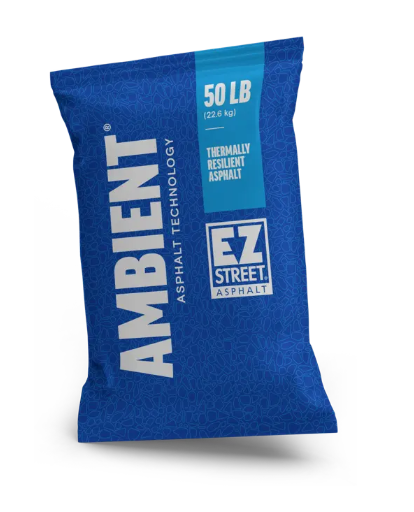
What it does: EZ Street Cold Asphalt is a polymer-modified asphalt patch that bonds in wet or dry holes and takes traffic the moment you finish compacting.
Best for: Crews patching parking lots and roadways in rain, snow, or standing water, where waiting for a dry window costs a mobilization.
EZ Street builds its whole pitch around water tolerance, and that claim holds up in the instructions. You clear the loose debris, leave the water, fill just above grade, and compact.
On a live lot, placing and opening a patch in one visit matters as much as the material does, which is why it pairs well with tight asphalt safety practices around traffic control.
Key features
- Works in water: the mix displaces the water, and compaction pushes it out, so nobody stands there with a blower waiting for a hole to dry
- No tack coat: no tack or bonding agent required
- Immediate traffic: drive over the patch as soon as it's compacted, and traffic finishes the job, which EZ Street calls secondary compaction
- Two-inch lifts on deep repairs: fill deeper holes in layers and compact each one, which is where your asphalt thickness math earns its keep
- Regional producers: partner plants make the mix in different regions
Pros
- Standing water stops being a reason to reschedule a repair, which protects your patching schedule in spring
- It's simple enough to compact by driving over it, though a plate or roller gives the best result
- Bags and bulk sacks sell direct through their online store, so a small order doesn't need a distributor relationship
- EZ Street reports that DOTs across the country buy it in both bagged and batch quantities
Cons
- It's most workable at 70°F to 90°F, and EZ Street says warming the material in a hot box or heated dump bed is acceptable in winter, as long as it stays under 125°F
- Bulk sacks have a shorter shelf life: EZ Street rates the 1-ton sack at up to six months, so it suits planned work better than a long winter stockpile
Pricing
EZ Street sells 50 lb bags, pallets, and 1-ton bulk sacks through their online shop, with prices listed on each product page. Batch quantities and loose bulk go through their contact page for a quote.
Bottom line
For wet-weather patching, EZ Street is the one to hand a crew without a briefing. If most of your repair work happens on dry days in warm months, a lower-cost bagged patch may be enough.
3. Perma-Patch Regular Mix: Best for Thin Skin Patches and Utility Cuts
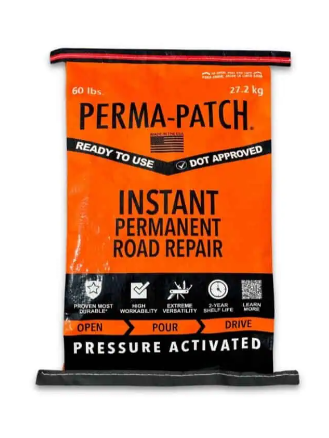
What it does: Perma-Patch is a pressure-sensitive cold patch that hardens through compaction and goes down as thin as a quarter inch.
Best for: Utility cuts, manhole surrounds, depressions, and shallow skin patches where a two-inch minimum lift would leave a hump.
The quarter-inch application depth is the headline here, and it solves a real problem. Feathering a shallow depression with standard cold mix rarely holds, so a quarter-inch minimum opens up repairs you would otherwise mill and overlay.
Key features
- Quarter-inch minimum thickness: Perma-Patch says it can be feathered to the thickness of its aggregate
- Wide temperature window: Perma-Patch rates the Regular Mix from 0°F to 100°F on most product pages, and its Quick Set Mix, built for warm climates, up to 120°F and above
- Bonds to more than asphalt: it grips concrete, steel, and wood
- Cures through compaction: no curing window, no drying time, and it won't stick to rubber tires
- Wet-hole placement: Perma-Patch can be added to a pothole holding water
- Two-year shelf life: pails and bags sit in the shop through an off-season without going hard
Pros
- Perma-Patch cites the 1990s federal SHRP durability study, where it posted the lowest failure rate of the six materials tested (23.5%)
- Steel and concrete bonding opens up bridge joint and manhole work with the same material on the truck
- Pails in 30 lb and 50 lb sizes suit a service-truck or facilities crew that doesn't move pallets
Cons
- A 2022 Ohio DOT winter study found it had the shortest service life of the mixes tested, especially when compacted with a hand tamper or truck tires, so it's a weaker pick for deep winter potholes
- Some Perma-Patch pages rate the Regular Mix as low as -15°F while most stop at 0°F, so confirm the rating with your distributor before winter work
Pricing
Perma-Patch publishes no rates. Their where-to-buy page maps locally stocking distributors, and their team connects you with a reseller for anything from one bag to a truckload.
Bottom line
Keep Perma-Patch on the truck for thin repairs and utility cuts, and buy something cheaper in bulk for routine pothole work.
4. QPR High Performance Cold Mix: Best for Bulk Stockpiling Through Winter
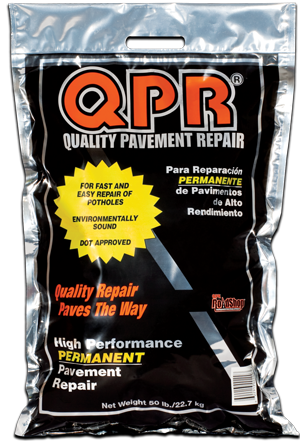
What it does: QPR is a modified cold mix built to sit outside in an uncovered stockpile for a full year and stay workable.
Best for: Contractors and agencies who buy cold patch by the ton and pull from a yard pile all winter.
Because QPR guarantees that pile, off-season bulk orders become a real cost play.
Key features
- One-year uncovered stockpile guarantee: no tarps, no shed, no seasonal write-off, though QPR's newer No-VOC spec sheet lists six months in one section, so confirm the window with your rep
- Water-repelling additive: the mix goes into a wet or rain-filled hole without pumping it out first
- Usable down to -5°F: QPR rates the bagged mix from -5°F to 105°F
- Nationwide DOT approval: all 50 states, plus use in every Canadian province
Pros
- Wet-hole placement and no tacking make it fast for utility cuts and water valve surrounds
- Portable pugmill service lets larger operations produce material on site, including rejuvenated RAP
- Bulk production in every state keeps restocking simple wherever you work
Cons
- QPR designs the mix to stay somewhat pliable, so it needs repeated compaction from traffic to firm up fully
- Their own guidance puts the wait before sealing at roughly six months, which pushes seal work to the next season
- Bag prices at big-box retail don't reflect what you'd pay by the ton
Pricing
QPR doesn't post rates. Bags sell through Lowe's and bulk through QPR distributors, and their FAQ page explains bulk ordering and on-site production options.
Bottom line
QPR makes sense if you stockpile. For a two-truck operation buying bags a pallet at a time, the stockpile advantage doesn't pay you back.
5. Aquaphalt 6.0: Best for Schools, Bridge Decks, and Runways
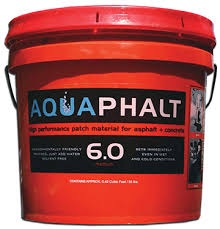
What it does: Aquaphalt 6.0 is a water-activated patch material with a plant-based binder that hardens when you wet it and tamp it.
Best for: Repairs on sensitive sites, including schools, hospitals, bridge decks, runways, and any property where solvent odor becomes a complaint.
Aquaphalt started as a patching material for the Autobahn, and a family-owned road construction company now manufactures it in Orange County, Virginia. The process comes down to three steps: pour, water, tamp.
Solvent-free, zero-VOC material changes the conversation on an occupied property, and the three-year limited warranty gives you something to point at in a proposal, though it covers replacement material or a refund, not the labor to redo the patch.
Key features
- Water-activated binder: the proprietary binder reacts with water alone, no solvents and no VOCs
- Three aggregate sizes: 4.0 fine for shallow work, 6.0 medium for repairs an inch or deeper, and 9.0 coarse
- Three-year warranty: backed by a published curing guarantee and warranty document
- Cures in 24 hours: hardening starts immediately, and the area opens to traffic right away
- Documented agency use: VDOT case studies, plus testimonials from VDOT bridge maintenance and the Raleigh-Durham Airport Authority on runway patches
Pros
- It's an easy fit for schools and other occupied properties
- The three-year warranty is the longest stated term on this list
- Bridge deck, runway, and concrete work all fall inside its published applications
- Aquaphalt's nationwide sales reps specialize in the product, so technical questions reach a specialist
Cons
- You need water on site, cut with brine or RV antifreeze below freezing, which is one more thing to haul on a winter route
- Buckets are the only format, so high-volume patch routes have no bulk option
- Retail pail prices vary widely by seller
Pricing
Aquaphalt sells through retailers and distributors instead of posting rates. Their where-to-buy locator finds nearby stockists, and territory managers nationwide handle demos and questions.
Bottom line
When the property owner cares about solvents, VOCs, or a warranty in writing, Aquaphalt is worth the premium. On a busy commercial patch route, the cost per pound is hard to defend.
6. Crafco HP ER Cold Patch: Best for All-Season Patching With a Gray Concrete Option
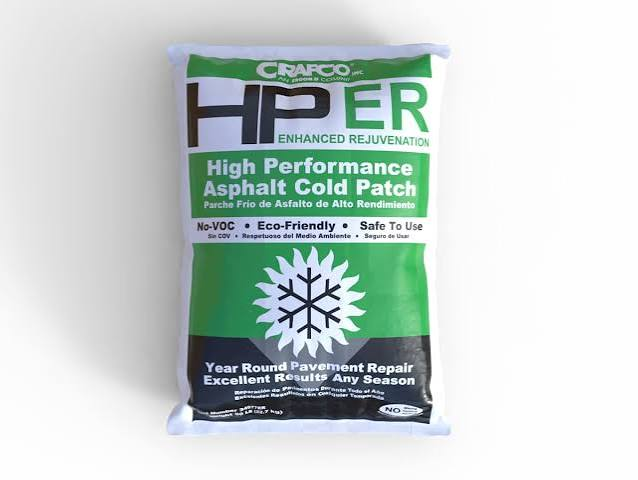
What it does: Crafco HP ER Cold Patch is a no-VOC cold patch with rejuvenating qualities and strong adhesion that works in cold, damp conditions and stays pliable in storage for up to a year.
Best for: Crews facing wet, chilly pavement, plus anyone patching concrete or oxidized asphalt where color matters.
Crafco, an Ergon company, sells two versions of the same idea. HP ER is the traditional black patch with the environmentally friendly binder, and HP Concrete comes in gray so a repair blends into concrete or faded asphalt instead of announcing itself.
Their installation guidance is detailed, right down to how much crown to leave.
Key features
- No-VOC binder: the formula also helps rejuvenate the surrounding pavement
- Gray option: HP Concrete matches concrete and oxidized asphalt, useful on sidewalks and parking decks
- A year of storage pliability: the material stays workable in the bag or the pile
- Documented placement method: two-inch lifts, compact each lift, and leave a half-inch crown for traffic
- Ranked compaction guidance: Crafco spells out that a ride-on or walk-behind compactor beats a hand tamper, and that throw-and-go costs least but holds up less well in high-speed or turning traffic
Pros
- Winter patch routes don't have to wait for a dry, warm day
- The gray HP Concrete version keeps repairs from standing out on concrete
- Their broader pavement preservation line means one supplier covers patch, crack seal, and joint work
Cons
- Their online store shows no prices and works on quote requests, so comparison shopping takes a phone call
- Black and gray are separate products, and the gray HP Concrete needs pavement at 30°F or warmer, so true winter work falls to the black HP ER
- ShopCrafco's HP ER listing carries a California Prop 65 warning, which some property managers ask about
Pricing
Crafco routes purchases through ShopCrafco and its Supply Centers, reps, and distributors, where you request a quote rather than see a listed price. Its locations page lists every Crafco Supply Center by state.
Bottom line
If you patch through cold, wet seasons, or you're repairing concrete walkways where a black patch looks wrong, Crafco earns a slot in the yard. Otherwise it's a solid mix without a standout reason to switch.
7. Sakrete U.S. Cold Patch: Best for Small Repairs and Recycled Content
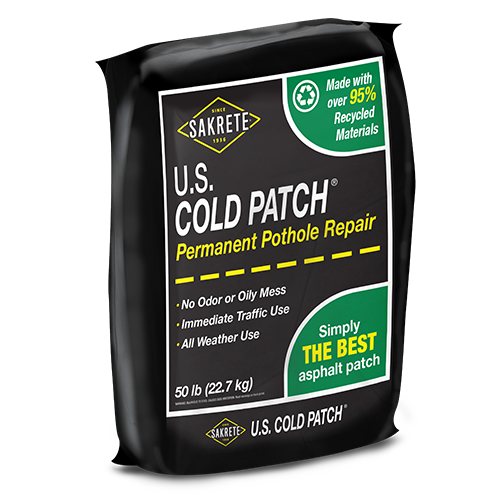
What it does: Sakrete U.S. Cold Patch is a low-VOC, odorless cold patch made from over 95% recycled asphalt that reaches hot-mix hardness once you compact it.
Best for: Small potholes, edge failures, and utility cuts on occupied properties, plus contractors who buy bagged material through a dealer.
This is the one you buy when the job is small, and the client is watching. Recycled content and no oily smell read well on a property with tenants, and Sakrete publishes hard limits on repair size instead of overselling what a bag can do.
Key features
- Over 95% recycled asphalt: the figure Sakrete publishes on its product page
- Low VOC and odorless: no odor or oily mess
- Published coverage math: Sakrete lists a yield of about 4 square feet per 50 lb bag at one inch deep
- Defined repair limits: rated for 1 to 4 inches deep and repairs up to 2.5 feet by 2.5 feet
- DOT approvals: approved in California, New Jersey, New York, North Carolina, Tennessee, Washington, and Washington, D.C.
- Retail availability: sold through home centers and local dealers, but stock is regional, so check Sakrete's dealer locator first
Pros
- Odorless, low-VOC material keeps complaints down on occupied commercial properties
- Published yield figures make estimating a small repair quick
- Recycled content gives you a real answer when a client asks about sustainability
Cons
- The 6-square-foot repair cap rules it out for larger patches and wide utility cuts
- DOT approval covers seven jurisdictions, which is narrow next to QPR's nationwide footprint
- Retail bag pricing shifts by store and season, so material cost in a bid stays a moving target
Pricing
Sakrete leaves pricing to its retailers. Their where-to-buy page finds nearby stockists, and their asphalt repair calculator sizes the order first.
Bottom line
For small repairs on properties where odor and appearance matter, U.S. Cold Patch is a good value. Anything bigger than 2.5 by 2.5 feet belongs in a different bag.
Which Cold Patch Asphalt Should You Choose?
UPM and EZ Street cover most commercial crews, Perma-Patch fills the thin, shallow work, and the other four fit narrower jobs. The deciding factor is how you buy material and what the weather does to your season.
Choose UPM Cold Mix if you:
- Patch year-round and want a grade formulated for January as well as July
- Buy across formats, from pails on a service truck to bulk tons in the yard
- Want a written replacement guarantee behind winter-grade material
Choose EZ Street Cold Asphalt if you:
- Face wet holes and rain delays that push repair work off the schedule
- Need a patch open to traffic the second compaction finishes
- Want to order bags and bulk sacks directly without a distributor account
Choose Perma-Patch Regular Mix if you:
- Repair utility cuts, manhole surrounds, and shallow depressions more than deep potholes
- Need a material that goes down at a quarter inch and holds
- Patch bridge joints, steel plates, or concrete alongside asphalt
Choose QPR if you:
- Keep a bulk pile outdoors between seasons
Choose Aquaphalt 6.0 if you:
- Work on schools, campuses, or other occupied sites where solvent fumes draw complaints
Choose Crafco HP ER or HP Concrete if you:
- Need a gray patch that blends into concrete walkways or sidewalks
Choose Sakrete U.S. Cold Patch if you:
- Make small repairs with 50 lb bags
Skip cold patch entirely if:
- The failure is structural, with alligator cracking across the area, because that needs excavation and base repair
- The patch area is large enough to justify a hot box or a plant run, where hot mix usually costs less per square foot
- You've already patched the same spot twice and watched it fail, which points at drainage or base problems
How to Apply Cold Patch Asphalt
Most of these products go down the same way, and the product-specific details are in each section above. For cracks rather than potholes, a crack filler is the better tool.
Follow these steps:
- Clean out the hole: Sweep or blow out loose debris, and cut the edges square on bigger repairs. Most of these products tolerate standing water, but Crafco advises removing excess water in winter so ice doesn't form under the patch.
- Fill in layers: Build deep repairs up in layers about two inches thick, compacting as you go; Crafco, EZ Street, and UPM all specify this. Aquaphalt also needs water poured over it before tamping.
- Overfill slightly: Leave the patch a little proud of the surface so compaction brings it flush, from a half-inch crown on Crafco to 25% high on UPM.
- Compact it hard: Use the heaviest compactor you have. A roller or plate compactor does a better job than a hand tamper, and the patch is only as strong as its compaction.
- Open it to traffic, then wait to seal: Most of these patches can take traffic right after compaction, and traffic keeps compacting them. Hold off on sealcoating until the product's cure time is up.
Final Verdict
The best cold patch asphalt for most commercial paving contractors is UPM Cold Mix, because season-matched material removes the single biggest variable in cold-weather patching.
EZ Street takes it if standing water shows up on your jobs more often than big temperature swings do, and Perma-Patch wins on quarter-inch lifts.
All seven are a step up from generic yard mix, and the 1990s FHWA research shows why that matters: with quality material, pothole patches can stay in service for several years, even when they go in as a temporary fix.
Price, Schedule, and Bill Every Patch Job in OneCrew
OneCrew is a platform built specifically for project-based commercial asphalt and concrete paving contractors. It ties your patch and repair operation together from the first site measurement to the final payment, so the margin your material choice protects in the field doesn't disappear in the office.
Here's what it covers:
- Price cold patch repairs on margin: OneCrew's estimating tools let you measure repairs with site and/or plan mapping, auto-calculate tonnage and materials, and set default margins, with OneCrew customers saving 12 to 16 hours per estimator each week.
- Schedule the crew with the right material on the truck before they leave the yard: OneCrew's scheduling feature assigns crew members and equipment to individual services and splits multi-phase projects across crews, so your office and field stay aligned from mobilization through patch placement and final compaction.
- Send work orders, site details, and patch specs to the crew's phones before the first stop: The job site management tools push mobile work orders, GPS directions, and job specs to crew phones and pull time, quantities, and photos back to the office as each repair closes out.
- Turn a patch estimate into a signed proposal before the pothole gets worse: OneCrew's estimating and proposal tools generate professional, branded proposals directly from your estimate.
- Keep every property, contact, and past repair together so a patch in March becomes a sealcoat proposal in the fall: OneCrew's CRM tracks every lead, follow-up, job site, and project history in one place.
- Invoice from the work order the same day the crew finishes and sync to QuickBooks without double entry: OneCrew's invoicing tools generate invoices from the line items already in the platform and sync invoices and payments with QuickBooks in both directions.
Cold patch repairs are small tickets, so the paperwork around each one decides whether it makes money. Book a Demo, and we'll show you how OneCrew takes a repair from measured area to priced proposal, scheduled crew, and QuickBooks-synced invoice, with your material cost built in from the start.
FAQs
What is the best cold patch asphalt for potholes?
UPM Cold Mix is the best cold patch asphalt for most paving contractors. Its winter, spring/fall, and summer grades keep it workable in any season. For standing water, EZ Street is the better pick, and Perma-Patch handles repairs down to a quarter inch.
How long does cold patch asphalt last?
Quality cold patch can last several years. In FHWA's 1990s field study, 56% of 1,250 patches lasted to the end of the study, and low-quality mixes gave out faster. Cold, wet weather cuts that short: a 2022 Ohio DOT winter study found that freezing days and how soon snow fell after placement both affected how long patches lasted, and it advises against patching when snow is expected the next day.
How much does a 50 lb bag of cold patch asphalt cover?
About 4 to 5 square feet at one inch deep. Sakrete's figure is 4 square feet at an inch deep, and Aquaphalt rates one 50 lb bucket at about 5 square feet. Double the depth and the coverage drops by half, so measure depth before you order.
Can you put cold patch asphalt in a hole full of water?
Yes, if the product is made for it. EZ Street, QPR, Perma-Patch, and UPM all say their mixes can go into water-filled holes, and QPR adds a water-repelling additive for exactly that.
Do you need to compact cold patch asphalt?
Yes. Compaction is what gives cold patch its density and bond. A roller gives the most durable result, then a plate compactor, then a hand tamper; letting traffic do it is cheapest but holds up worse under fast or turning vehicles. Overfill slightly so the patch finishes flush after compaction.
How long before you can sealcoat over a cold patch repair?
It depends on the product: anywhere from 24 hours to six months or more. UPM needs at least 30 days, with six months to a year preferred; QPR, about six months; and solvent-free Aquaphalt, 24 hours, or right after compaction with a no-VOC sealer. Sealing a solvent-based patch too early traps uncured material under the coating.
What are the downsides of cold patch asphalt?
Cold patch can't fix structural failure, usually costs more than hot mix on large areas, and rarely matches faded pavement unless you stock a gray mix. It also needs proper compaction to hold, and solvent-based mixes need weeks or months to cure before sealing.
How do you get cold patch asphalt to harden?
Compact it well, then let traffic and time finish the job. Most cold patch sets up as it's compacted and cures, not as it dries, and curing slows down in cold weather. Water-activated Aquaphalt is the exception: it hardens once it's watered and tamped, then fully cures in about 24 hours.
Is cold patch asphalt better than hot mix?
Hot mix generally makes the stronger, longer-lasting repair, but it comes with strict paving temperature requirements, and cold patch wins when you need a fix right away. Cold patch goes into cold or wet holes straight from the bag, with no plant run and usually no hot box needed. For bigger or planned repairs, hot mix or infrared patching is usually the better choice.