What Is Construction Project Centralization?

Construction project centralization is defined as the practice of consolidating all project data, workflows, and controls into a single, interconnected digital platform that acts as the authoritative source of truth for every team member on a job. You’ve probably felt the pain of chasing a subcontractor’s schedule update across three different apps while your project manager is working from a spreadsheet that’s already two days old. That fragmentation costs real money. Centralization eliminates those siloed software solutions by hosting estimates, schedules, field data, and financials in one dashboard, reducing communication errors and the costly rework that follows. For construction managers and project coordinators, understanding this model is the first step toward running tighter, more profitable projects.
What does construction project centralization actually entail?
Centralized project management replaces the patchwork of disconnected tools most contractors rely on with a unified digital environment where every stakeholder sees the same data at the same time. Think of it as moving from a filing cabinet in every trailer to one shared command center that everyone can access from the field or the office.
In practice, centralization pulls together several critical project layers:
- BIM models and design documents linked directly to schedules and cost codes
- Financial data including budgets, change orders, and invoices updated in real time
- Field reports and daily logs entered by crews on mobile devices and immediately visible to the office
- Resource and equipment schedules tied to the project timeline
The most structured version of this approach is sometimes called a Construction Data Hub (CDH), which links the core project breakdown structures — organizational (OBS), product (PBS), resource (RBS), and work (WBS) — so that data fields connect across multiple project dimensions, giving managers a multidimensional view of performance rather than a flat spreadsheet summary.
Centralized dashboards also change who has visibility. Instead of a project manager filtering information before it reaches ownership or the client, everyone with the right permissions sees the same live data. That transparency alone reduces the “I didn’t know about that” conversations that delay decisions and inflate costs. Pairing this with solid construction project reporting practices turns raw data into decisions your whole team can act on.
What are the benefits of centralization?
The case for centralized project management is strong. Mapping decisions to specific owners inside a shared system improves how fast issues get resolved, because problems don’t sit in someone’s inbox waiting for a reply.
Beyond speed, the financial case is real. Eliminating rework caused by miscommunication and outdated information recovers meaningful margin on a large paving contract.
Centralization also changes how you forecast. Connected project controls replace the outdated monthly report cycle with real-time performance indicators, so cost and schedule surprises get caught weeks earlier rather than at the final billing. Traditional delivery methods fragment data across teams and systems, and that fragmentation is where budget overruns are born.
The efficiency gains extend across specific functions:
- Estimating: Standardized templates and historical cost data reduce bid preparation time and improve accuracy
- Scheduling: Live resource data prevents double-booking crews and equipment
- Document control: A single version of every drawing and spec eliminates the “which revision are you working from?” problem
- Invoicing: Centralized billing tied to project milestones reduces disputes and speeds up collections
How does centralization compare to decentralized structures?
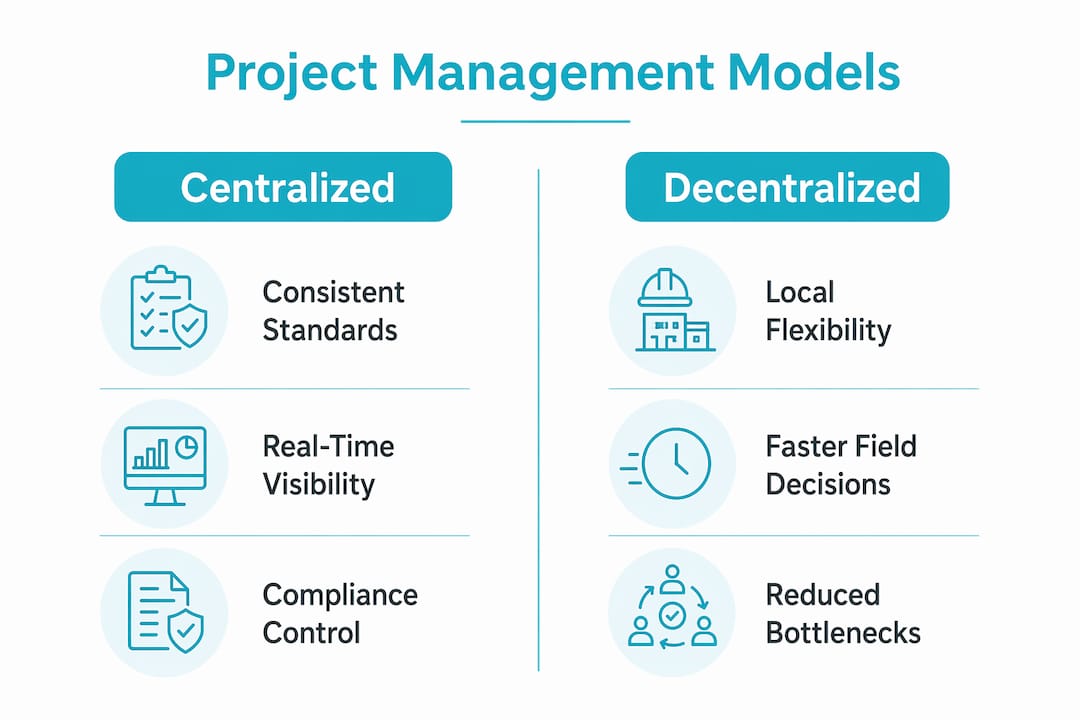
Centralized and decentralized project management represent two ends of a spectrum, and most successful construction firms land somewhere in the middle.
Over-centralization creates real problems in fast-moving field operations. If a crew foreman has to wait for back-office approval to log a material change, the job slows down. Tailored systems that allow field teams to enter data directly from mobile devices, without routing everything through a central gatekeeper, solve this problem.
The right model depends on two factors: team maturity and project variability. A firm running 20 identical residential paving jobs benefits from tight central control.A firm managing a varied mix of commercial lots and larger contracts needs more local flexibility within a shared reporting framework.
Hybrid approaches that centralize compliance, reporting, and financial controls while allowing field teams to manage day-to-day execution tend to outperform either extreme. Centralization enhances standardization and governance, but it must be balanced with operational agility to avoid turning your project management office into a bottleneck.
Pro Tip: Before choosing a model, map every decision your field teams make in a typical week. Any decision that requires real-time local knowledge should stay decentralized. Any decision that affects cost, compliance, or schedule should route through the central system.
How to implement centralized construction project management
Getting centralization right takes more than buying new software. The sequence matters as much as the tools.
- Clean your data first. Legacy fragmented data must be standardized before it enters any centralized hub. Inconsistent cost codes, duplicate vendor names, and mismatched schedule formats will corrupt your analytics from day one. Standardize terminology across every project before you migrate anything.
- Build your data hub structure. Map your OBS, PBS, RBS, and WBS frameworks before selecting software. A breakdown-structure blueprint tells you what data fields to capture and how they connect. Software should fit your structure, not the other way around.
- Establish a PMO or command center. Centralization requires a defined governance layer: standard project playbooks, clear escalation paths, and someone accountable for data quality. This structure frees individual project managers from administrative work and lets them focus on field execution.
- Select software with real-time dashboards and mobile capability. The best construction project management software connects estimating, scheduling, field data entry, and invoicing in one place. Mobile-first field entry is non-negotiable if you want real-time data without back-office delays.
- Run an annual audit. High-performing PMOs revisit their centralization structure every year to adjust between centralized, decentralized, or hybrid models based on what the project portfolio actually needs. What worked for last year’s contract mix may not fit next year’s.
Pro Tip: Pilot centralization on one project type before rolling it out firm-wide. A single paving contract is a low-risk environment to test your data standards, dashboard setup, and field adoption before you commit the whole organization.
Key takeaways
Construction project centralization works because it replaces fragmented data and disconnected tools with a single source of truth that gives every stakeholder real-time visibility, faster decisions, and measurable cost savings.
How OneCrew supports centralized project management
OneCrew is built specifically for paving and asphalt contractors who are done managing their business across five different apps. The platform brings estimating, scheduling, field data entry, and invoicing into one place, so your office and field teams are always working from the same information.
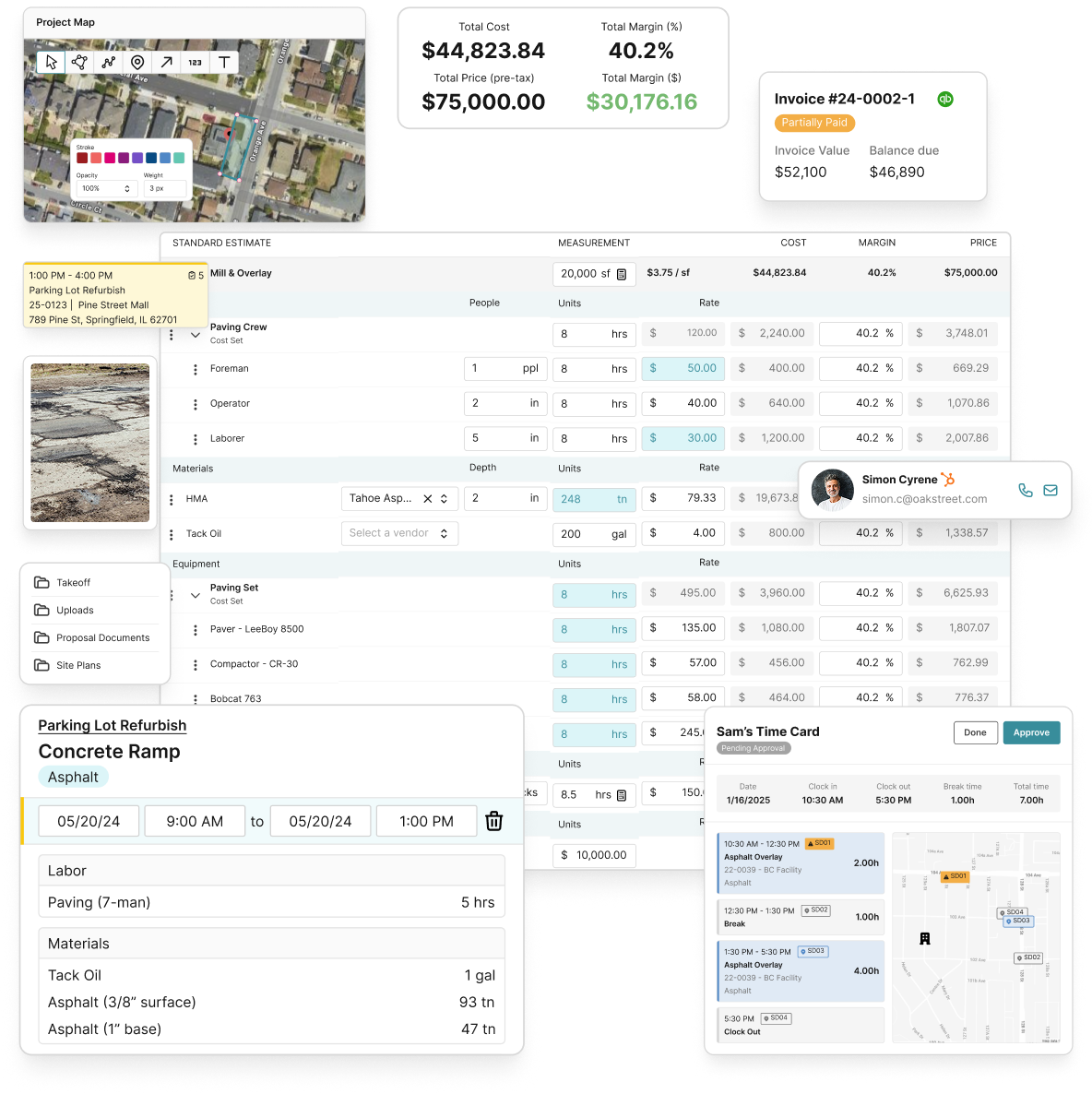
When your estimator builds a bid in OneCrew, that data flows directly into the project schedule and cost tracking. When a crew foreman logs field hours or material usage from a mobile device, the office sees it immediately. No re-entry, no version conflicts, no end-of-week surprises.For contractors who want to put the principles of centralized project management into practice without a long implementation project, OneCrew is worth a closer look. Book a demo to see it in action.
FAQ
What is construction project centralization?
Construction project centralization is the consolidation of all project data, workflows, and controls into a single digital platform that serves as the authoritative source of truth for every team member. It replaces disconnected software tools with one shared environment covering estimates, schedules, field data, and financials.
What is a Construction Data Hub?
A Construction Data Hub (CDH) is a structured framework that links organizational, product, resource, and work breakdown structures across a project, connecting data fields to support multidimensional performance analysis.
How much can centralization reduce construction costs?
Centralization can meaningfully reduce project costs by eliminating rework caused by miscommunication and outdated information, and it improves how quickly issues get resolved.
What’s the difference between centralized and decentralized project management?
Centralized management routes all data and decisions through a shared platform with consistent standards, while decentralized management gives field teams more autonomy but risks creating data silos. Most high-performing construction firms use a hybrid model that centralizes compliance and reporting while preserving field-level flexibility.
When should a construction firm avoid full centralization?
Full centralization creates bottlenecks when field teams can’t update data quickly or need real-time local decision-making. Firms managing highly variable project types or crews with limited digital literacy often perform better with a hybrid approach that keeps day-to-day execution decisions at the field level.