Paving Project Management: A 2026 Guide for Contractors

Paving project management is the end-to-end process of planning, coordinating, and overseeing every phase of a paving project to deliver durable pavement on time and within budget. It covers everything from writing a detailed scope of work and scheduling crews to managing material specs, running quality control tests, and closing out the job with a final inspection. For commercial paving project leads, it’s the difference between a job that runs clean and one that bleeds money through rework, disputes, and delays. This guide breaks down the core components, technical requirements, and modern tools that define effective paving project management in 2026.
What are the essential components of paving project management?
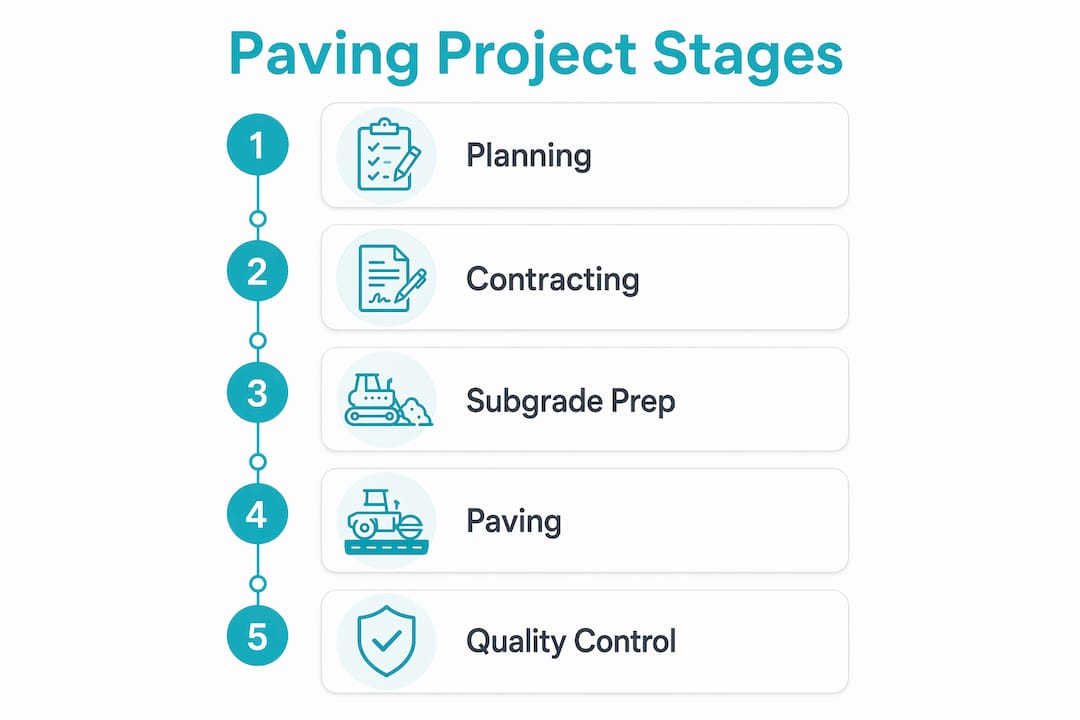
A structured paving project plan includes a detailed scope of work, timelines, budget with contingencies, and resource plans, finalized with post-construction inspections. Each of these components carries its own weight, and skipping any one of them creates gaps that show up as cost overruns or failed inspections.
Here’s what a complete paving project management framework covers:
- Scope of Work (SOW): The SOW defines exactly what work gets done, by whom, and to what standard. A well-written SOW removes ambiguity about subgrade responsibilities, material grades, and surface tolerances before the first truck rolls.
- Project scheduling: A realistic timeline accounts for weather windows, material lead times, and crew availability. Digital scheduling tools let you visualize the full project calendar and catch conflicts before they become delays.
- Budgeting and contingency planning: Every commercial paving budget needs a contingency line, typically 5 to 10 percent, to absorb unexpected subgrade conditions or material price swings.
- Resource allocation: Matching the right crew size, equipment fleet, and material volumes to each phase of the job keeps production rates on track and prevents costly idle time.
- Stakeholder communication: Consistent communication among contractors, engineers, and clients prevents costly delays. Weekly progress updates and a shared project log keep everyone aligned without requiring constant calls.
- Quality control: Inspections, density tests, and material submittals aren’t just compliance boxes. They’re the checkpoints that confirm the pavement will perform as specified.
Pro Tip: Build your SOW around the 14 must-have contract components for asphalt paving. A thorough contract scope doubles as your quality control checklist throughout the job.
How do technical requirements impact paving project management?
Technical specifications aren’t background detail. They’re the foundation of every management decision you make on a paving project, from how you write the bid to how you close out the job.
Failure to define who is responsible for subgrade bearing capacity and proof rolling leads to disputes and premature pavement cracking. That single oversight is one of the most common sources of warranty claims in the first years after project completion. Assign proof rolling responsibility explicitly in the contract, and document the results before any base material goes down.
Material submittals matter just as much. Requiring the mix design submittal before mobilization gives you time to verify that the specified Superpave mix type matches the project’s traffic loading and climate conditions. Catching a wrong mix on paper costs nothing. Catching it after placement costs everything.
Pro Tip: Reference the asphalt density test guide to set your testing frequency and acceptance thresholds before the job starts. Having those numbers in writing protects you if a dispute arises.
What modern tools improve paving project management efficiency?
Treating a construction plan as a strategic playbook rather than a checklist shifts bids from guesswork to data-driven decisions and protects your margins. The tools available in 2026 make that shift practical, not theoretical.
Here’s how modern tools fit into each phase of project management:
- AI-assisted quantity takeoffs: AI-powered measurement tools calculate square footage, tonnage, and material volumes from aerial imagery or uploaded plans. This reduces manual measurement errors and speeds up the estimating phase significantly.
- Digital scheduling platforms: Visual project timelines let you assign crews and equipment to specific dates, flag conflicts, and share the schedule with subcontractors and clients in real time.
- Geotagged site photos and annotated maps: Good site documentation using geotagged photos and annotated maps creates visual records that guide crews, provide client clarity, and help avoid disputes. A photo timestamped to a GPS coordinate is far more defensible than a handwritten note.
- Integrated project management software: Platforms that connect estimating, scheduling, field data, and invoicing in one place eliminate the version-control problems that come from managing a job across spreadsheets, texts, and email threads.
- Mobile field data entry: When field crews log production rates, material deliveries, and test results from a mobile app, the office sees live data instead of waiting for end-of-day reports.
Modern software and AI-assisted workflows automate tedious parts of quantity takeoffs and scheduling, improving profitability and accuracy. The time savings compound across a full project season. If you’re still running jobs on spreadsheets, you’re leaving margin on the table.
How to coordinate stakeholders and ensure quality control throughout a paving project?
Paving project management is as much about communication as technical execution. It’s the glue that holds project success together, and it requires a deliberate system, not just good intentions.
Effective stakeholder coordination starts before the first day of paving. A pre-paving readiness checklist confirms that subgrade testing is complete, materials are approved, equipment is staged, and all parties know the schedule. Skipping this step is how projects start two days late and never recover.
During construction, quality control runs parallel to production. Key practices include:
- Daily field logs: Record production quantities, weather conditions, material delivery tickets, and any deviations from the plan. These logs are your first line of defense if a dispute arises.
- Inspection hold points: Define specific milestones where work stops for inspection before proceeding. Common hold points include subgrade acceptance, base course compaction, and surface course placement.
- Client progress updates: Send brief, factual updates at agreed intervals. A short photo report after each major phase keeps clients informed and reduces the volume of check-in calls you field.
- Post-construction evaluation: Final inspection and post-project evaluation confirm the pavement meets specifications and identify lessons for future projects. Document the as-built conditions, including any scope changes, before you close out the contract.
Using contract scopes and warranty language as active management tools, rather than filing them away after signing, keeps everyone accountable throughout the job. When a question comes up about who owns a problem, the answer is already in writing.
Key takeaways
Effective paving project management requires a defined scope, technical precision, and consistent communication to deliver durable pavement on time and within budget.
How OneCrew supports your paving project management
Managing a commercial paving project across spreadsheets, texts, and separate software tools creates gaps that cost you time and money. OneCrew is built specifically for asphalt paving contractors, connecting estimating, scheduling, field management, and client communication in one platform.
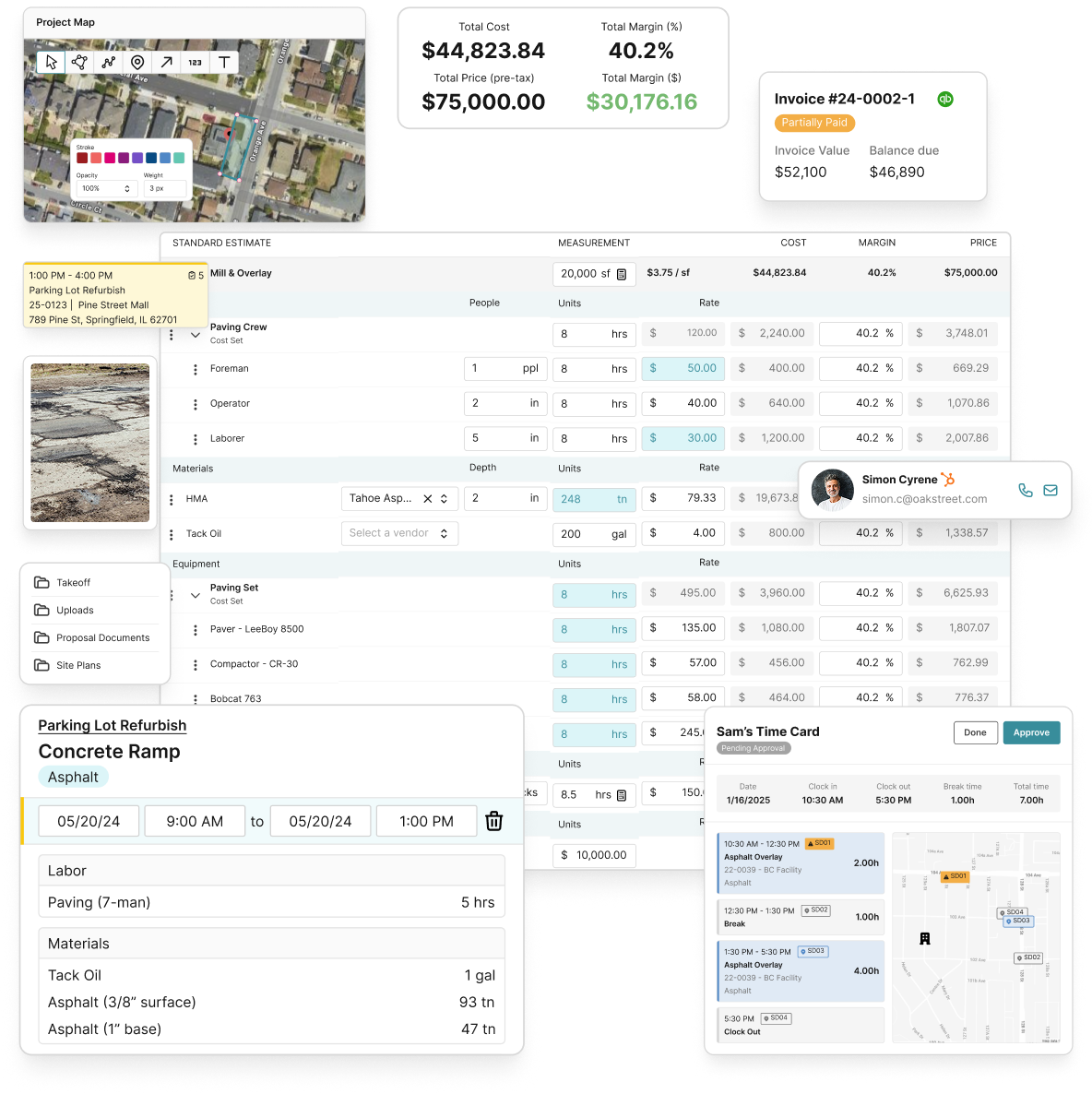
With OneCrew, your field crews log production data and site photos from a mobile app while your office sees live project status without waiting for end-of-day calls. The mobile field management app keeps your team aligned from the first day of prep through final inspection. If you’re looking to run tighter jobs with fewer errors and better client visibility, OneCrew is worth a close look. Book a demo to see it in action.
FAQ
What is paving project management?
Paving project management is the organized process of planning, coordinating, and overseeing all phases of a paving project, from scope development and scheduling through quality control and final inspection. It integrates technical requirements like mix design and compaction standards with practical execution to deliver pavement on time and within budget.
What are the key components of a paving project plan?
A paving project plan covers scope of work, project schedule, budget with contingencies, resource allocation, stakeholder communication, and quality control protocols. Each component connects directly to the others, so a gap in one area typically creates problems in another.
Why does subgrade preparation matter for project management?
Subgrade bearing capacity and proof rolling must be explicitly assigned in the contract scope. Leaving ownership undefined is one of the leading causes of premature pavement failure and warranty disputes in the years following project completion.
How does density testing fit into paving quality control?
Density testing is typically conducted at one nuclear test per 500 square yards per lift, with a minimum compaction target of 92 to 96 percent of gyratory rice density. Setting these thresholds in writing before the job starts gives you a clear, defensible acceptance standard.
What tools improve how you manage paving projects?
AI-assisted quantity takeoffs, digital scheduling platforms, geotagged site documentation, and integrated project management software all reduce manual errors and improve field-to-office communication. Platforms like OneCrew combine these functions in one place built specifically for paving contractors.