13 Best Paving Equipment Manufacturers in 2026

We mapped the paving equipment manufacturers that actually move the world's roads, then ranked the 13 that matter most in 2026 by reputation, global reach, and the machines crews swear by.
You'll get each brand's roots, where it builds, the kind of work it owns, and what its pavers cost.
Some of these names you already know: Caterpillar and Vögele show up on many interstate jobs. Others, like Sany and XCMG, quietly build a significant share of the planet's pavers and rarely get mentioned in North American shops.
The list runs from century-old German engineering houses to scrappy American specialists, so wherever your work sits, there's a maker built for it.
The 13 Best Paving Equipment Manufacturers: Quick Comparison
** Prices are approximate starting points for newer machines and shift with configuration and condition. Always check current pricing before committing.
How We Ranked These Paving Equipment Manufacturers
We built this list the way a fleet buyer would size up the market: by who actually builds quality machines at scale, not by who runs the slickest ads. To rank the paving equipment manufacturers below, we weighed four things:
- Global footprint and scale: A brand earns a spot when its machines show up on real jobsites across multiple continents, backed by manufacturing that can keep up with demand.
- Build quality and mat results: We looked at how each maker's pavers lay a mat, hold a grade, and survive long seasons, drawing on contractor feedback and field reports.
- Dealer and parts support: Even the best machine eats into profit when it sits broken. Brands with deep service networks scored higher, since downtime costs real money.
- Specialization and value: Some makers own a niche (concrete, milling, compact work) and others win on price, so we matched each to the jobs where it genuinely shines.
That mix gives you a list of paving equipment manufacturers you can buy from with confidence, whether you run a two-truck driveway crew or bid interstate work.
Extra tip: Curious how the surface itself differs from the mix you lay? Our guide to pavement vs. asphalt clears up the terms before you spend a dollar.
1. CAT: Best for Highway and DOT Work
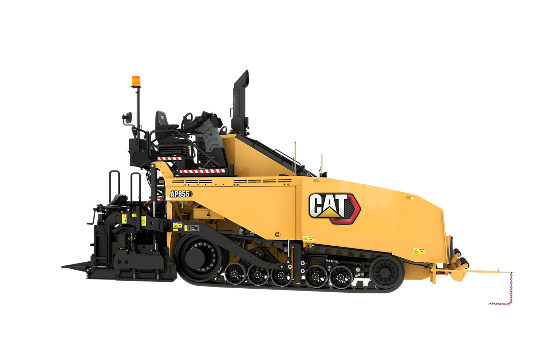
Caterpillar sits at the top of the paving equipment manufacturers list for one reason: when the job is big, CAT shows up.
Founded in 1925 and now serving more than 190 countries, the company builds asphalt pavers like the AP555, AP655, and AP1055 for the kind of nonstop, high-volume work that defines a contractor's year.
CAT machines handle the big leagues, which means multi-lane highways, state DOT contracts, and the massive commercial pours that make or break a season. You pay premium prices for that, but you get performance with almost no compromise in return.
Key features
- Mobil-Trac undercarriage: keeps the paver stable and floating even when the base underneath is rough.
- Onboard generator: heats the screed fast, so crews cut startup delays and keep the mat moving.
- Factory grade, slope, and thermal mapping: holds precision across long highway runs.
- Dual-seat operator stations: add fume extraction and touchscreen controls that make a 12-hour shift bearable.
Pros
- Exceptional mat consistency at high speed, ideal for long, uninterrupted runs
- Massive dealer support and parts availability across North America
- Strong resale value across the whole lineup
Cons
- Premium pricing with no real way around it
- Steep learning curve for new operators on the advanced features
- Transport size and weight can be restrictive on tight jobs
Pricing
The CAT AP555 and AP655 series start around $400,000 depending on configuration.
Bottom line
CAT remains the top-tier choice for serious highway and DOT contractors. The upfront cost pays off in reliability, uptime, and mat quality, and it's one of the most dependable road paving lines money can buy.
2. Vögele: Best for Precision and Big Projects
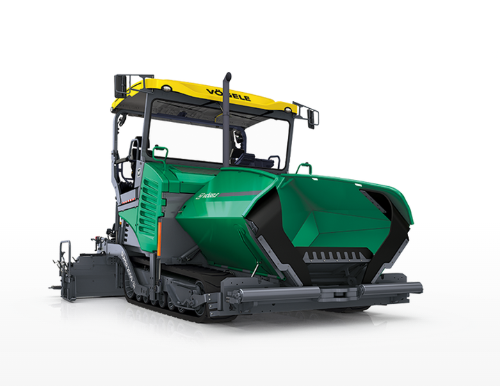
Vögele is one of the oldest names in the business and one of the most precise.
Founded in Mannheim in 1836 and now part of the Wirtgen Group under John Deere, it builds high-precision pavers like the SUPER 1700-3i and 2000-3i for highways, airports, and major infrastructure.
These machines earn their keep where smoothness bonuses decide profitability. On DOT contracts, interstate work, and airport runways, surface quality gets measured down to the millimeter, and that's exactly the ground Vögele owns among paving equipment manufacturers.
Key features
- ErgoPlus 3 console: a backlit interface you can read in any light.
- Niveltronic Plus slope and grade: delivers the smoothness that wins bonus money on DOT jobs.
- EcoPlus system: trims both fuel use and noise on long runs.
- AutoSet Plus: speeds up start and end-of-pass setup, which cuts the dead time between runs.
Pros
- Class-leading smoothness and control systems
- Wide paving range from 5 feet to 30-plus with extensions
- Strong support through the Wirtgen and John Deere networks
Cons
- High price next to most competitors
- Complex controls that take real training
- Heavier machines than others in the same class
Pricing
Vögele pavers start at around $450,000, with larger highway models climbing well past that.
Bottom line
Vögele sets the bar for precision paving. If you need a full tech suite and exceptional mat results, it's one of the best paving equipment lines on the market today.
3. Volvo CE: Best for Fuel-Efficient Large Jobs
Volvo Construction Equipment builds asphalt pavers that pair long runtimes with lower fuel bills. Part of AB Volvo, Volvo CE (founded in 1832 in Sweden) offers tracked and wheeled machines that give crews strong visibility, responsive controls, and built-in tech for cleaner, smoother jobs.
Volvo hits the sweet spot for contractors who run long days and watch fuel closely. The cabs keep operators comfortable through 12-hour shifts, and that pays off when you're bidding competitive work where every dollar per ton counts.
One note for buyers: Volvo CE sold its global ABG paving line to Ammann in a recent deal, so newer ABG-branded machines now sit under the Ammann umbrella.
Key features
- ECO mode and auto-idle: trim diesel use, which adds up across a season.
- Rotating seats: give 360-degree visibility so operators stay aware of the work area.
- Pave Assist: layers in weather and material tracking for smarter decisions on the job.
- Ultrasonic auger sensors: keep material flowing without constant babysitting, so the mat stays consistent.
Pros
- Great fuel economy compared with other brands
- Operator-friendly controls and an ergonomic cab
- Built-in productivity tools like CareTrack telematics
Cons
- Higher price than some similarly specced models
- Smaller dealer network in some US regions
- Fewer ultra-high-capacity models than CAT or Vögele
Pricing
Volvo 8-foot pavers start at around $200,000, with 10-foot highway pavers commanding more.
Bottom line
Volvo CE pavers are dependable and cost-effective, especially for crews running long days on medium to large jobs. The mix of fuel efficiency, visibility, and ergonomic controls makes them a smart pick among the leading paving equipment manufacturers.
4. Wirtgen: Best for Milling and Road Rehab
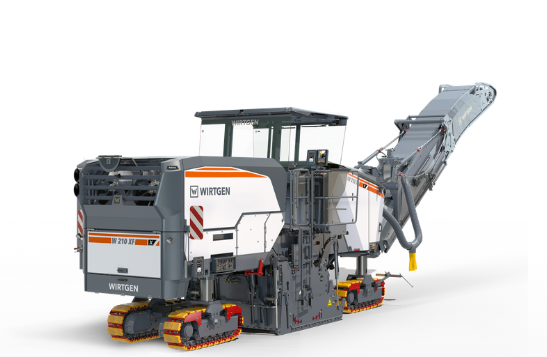
Wirtgen focuses on road rehabilitation rather than traditional asphalt pavers. Founded in 1961 and now the global leader in road milling, its machines show up on interstate jobs that need precision milling, in-place recycling, or slipform concrete.
If your work runs to mill-and-fill, full-depth reclamation, or new concrete lanes, Wirtgen belongs in the fleet.
The job before milling is measuring it right, and a clean number on the front end protects your margin. If you handle a lot of resurfacing, our breakdown of asphalt milling and the follow-up on what asphalt millings are covers where the material goes once it's ground up.
Key features
- Full road-rehab lineup: cold milling machines from compact to 12-foot class, plus recyclers, stabilizers, and slipform concrete pavers.
- Automated grade and slope controls: hold consistent milling depth across the job.
- Stringless options on concrete pavers: cut setup time on highway-grade pours.
- John Deere dealer and parts network: backs the machines across the US and Canada for continuous heavy-duty work.
Pros
- Industry leader in milling precision and productivity
- Automation cuts setup time and fuel use
- Heavy-duty build with solid resale value
Cons
- Premium price and parts cost
- Specialized focus, so not a traditional paver or roller brand
- Learning curve for smaller crews new to advanced controls
Pricing
Wirtgen's milling and recycling machines sit in the high six figures and up. Some listings show prices around $150,000 for used half-lane mills, with new highway-class units running far higher.
Bottom line
Pick Wirtgen for DOT-scale rehab when you want top milling, in-place recycling, or slipform concrete capability. It's overkill for small lots, but the productivity and finish on big road work justify the spend.
5. Dynapac: Best for Tech-Forward Paving
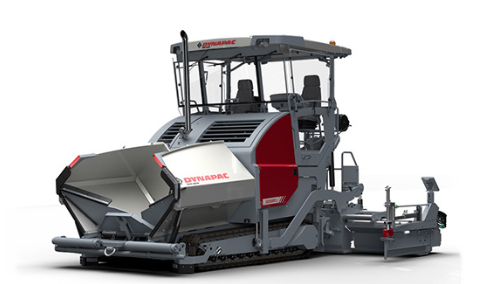
Dynapac, founded in 1934 in Stockholm, Sweden, and now part of the Fayat Group, builds pavers with a strong focus on operator experience and automation. Its lineup includes features like PaveManager, auto-grade controls, and customizable settings.
Dynapac gives you high-tech features without the high-end price tag. You get automation and digital tracking that rivals the premium brands, but you won't pay CAT money for it, which makes it a favorite for contractors who love tech and hate unnecessary markup.
Key features
- PaveManager 2.0: gives operators real-time control and diagnostics, so they catch issues early instead of mid-pour.
- LevelControl slope and grade: takes the guesswork out of precision work.
- Sliding dual-seat platform: adjusts to fit different operators across a long shift.
- Leica 3D compatibility: makes the machines a strong fit for GPS-guided jobs.
Pros
- Strong feature set for the price point
- Excellent automation and mat tracking tools
- Lower fuel use thanks to VarioSpeed engine control
Cons
- Smaller dealer network in North America
- Lower resale visibility than CAT or Volvo
- Some training needed to use the advanced controls well
Pricing
Mid-sized Dynapac pavers start around $220,000. Highway-class machines can reach $400,000-plus.
Bottom line
Dynapac delivers impressive automation and comfort, which makes it one of the most forward-thinking paving equipment manufacturers for crews chasing precision and value. It's a smart option for tech-focused field teams.
6. BOMAG: Best for Mid-Size and Compaction Synergy
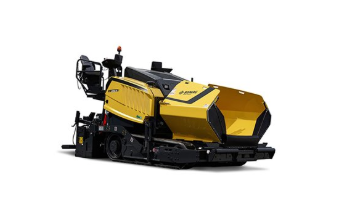
BOMAG builds asphalt pavers that pair naturally with its compaction equipment. Founded in 1957 in Boppard, Germany and now part of the Fayat Group, BOMAG designs machines like the CR820 and BF series for durability and smooth integration into a full paving fleet.
BOMAG makes the most sense if you already run its rollers. The paver-and-roller pairing is tight, you deal with one manufacturer for parts and service, and the controls won't overwhelm your operators.
Key features
- Pre-compaction screeds: lay a smoother base before the rolling phase, which lifts overall pavement quality.
- Advanced Pave co-pilot: adds automation that fights operator fatigue on long runs.
- Joblink telematics: handles remote diagnostics so fleet managers schedule maintenance before something breaks.
- Easy maintenance and setup: lowers the technical skill needed day to day.
Pros
- Strong build quality for long life in tough conditions
- Great paver-roller integration from a single brand
- Tech improvements closing the gap on top brands
Cons
- Still-growing reputation in pavers versus rollers
- Fewer high-capacity models
- Slightly less refined interface than top-tier competitors
Pricing
BOMAG 8-foot pavers cost around $250,000 or more.
Bottom line
BOMAG gives you solid performance and value, especially if you already run its rollers. For pavers with smart features and tough components, it's a reliable mid-tier pick.
7. Ammann: Best for Versatile European-Built Pavers
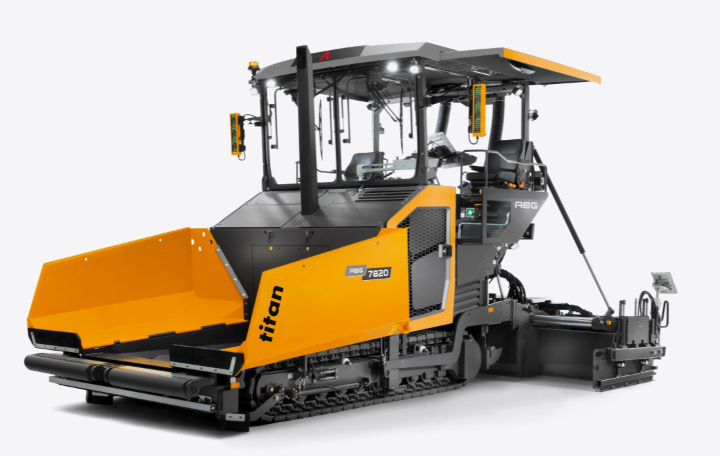
Ammann is a Swiss family business that has been building road equipment since 1869, which makes it one of the oldest paving equipment manufacturers still going.
Headquartered in Langenthal with production across nine sites, Ammann spans compact wheel pavers up to highway-class tracked machines.
Key features
- Wide paver range: spans mini wheel pavers for tight urban work up to tracked highway machines from the ABG line.
- Electric or gas screed heating: gives crews flexibility across job types and climates.
- Proven leveling systems like Mobamatic: keep grade consistent on European-built machines.
- Deep compaction heritage: keeps the paver-to-roller workflow consistent for crews already running Ammann rollers.
Pros
- Wide size range from mini pavers to highway-class machines
- Premium paver heritage added through the ABG acquisition
- Deep compaction expertise that complements paving
Cons
- Thinner US dealer presence than CAT or Volvo
- Used pricing often quoted in euros, which complicates North American buys
- Brand recognition still building in some American markets
Pricing
Ammann pavers span a wide range. Compact and used machines on marketplaces like MachineryTrader start near $100,000, while larger ABG-derived highway machines run toward $400,000.
Bottom line
Ammann is a strong global option if you want European build quality across a broad size range. The ABG acquisition makes it more compelling than it was a few years ago, especially for contractors open to non-US brands.
8. Roadtec: Best for Highway Paving and Material Transfer
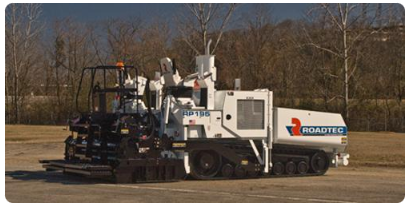
Roadtec, an Astec Industries company, has built highway-class paving equipment since 1981. Headquartered in Chattanooga, Tennessee, it makes pavers, milling machines, and the Shuttle Buggy material transfer vehicles that keep big paving trains running without stopping.
Roadtec earns its place among American paving equipment manufacturers on the strength of its anti-segregation design and its MTVs. If your crews fight inconsistent mix temperature on large jobs, a Roadtec paver-and-Shuttle-Buggy setup is built to solve exactly that.
Key features
- RP-series 8- and 10-foot models: come in rubber-tire, rubber-track, and steel-track variants to match the subgrade.
- Swing-out operator stations: give a clear view down both sides of the machine.
- Anti-segregation feed tunnel: keeps mix uniform from hopper to screed.
- Shuttle Buggy MTVs: handle up to 25 tons and feed the paver continuously for a smoother mat.
Pros
- Excellent anti-segregation design for consistent mix
- Industry-leading material transfer vehicles for non-stop paving
- US-based build and support through Astec dealers
Cons
- Smaller lineup than CAT or Volvo
- Best value shows on large jobs, less so on small lots
- Dealer density varies by region
Pricing
Roadtec RP-series pavers range widely by age and spec. Listings on MachineryTrader show prices at roughly $200,000.
Bottom line
Roadtec is a smart pick for production paving crews who value mix consistency and want a strong material transfer option. The Astec backing gives it reach that smaller specialists can't match.
9. LeeBoy: Best for Small Parking Lots and Streets
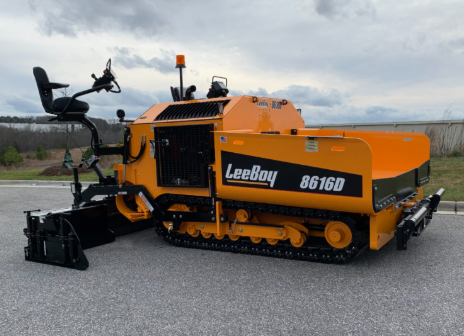
LeeBoy builds compact, user-friendly asphalt pavers for tight jobs like parking lots, driveways, and municipal roads. Started in a Charlotte garage in 1964 and now based in Lincolnton, North Carolina, it's a go-to brand for crews who want simple, reliable machines.
LeeBoy owns the parking lot and small street market for good reason. These machines slip into tight spaces, cost about half what the big brands charge, and won't intimidate operators who learned on simpler equipment.
Pairing one with the right crew makes quick work of lot jobs, and if striping is part of your scope, our parking lot striping guide covers the layout side.
Key features
- Legend screed system: lays a quality mat even in tight parking lots and narrow streets.
- Low-deck and high-deck options: let you dial in visibility for the job.
- Toggle-switch controls: skip the convoluted digital interface, so any crew member can run it.
- Slope control and width extensions: adapt to different jobs without extra equipment.
Pros
- Easy to transport and operate
- Budget-friendly price for entry-level contractors
- Strong US dealer support
Cons
- Limited to smaller jobs
- Lacks advanced tech features
- Not built for heavy production or highways
Pricing
New LeeBoy pavers are around $100,000.
Bottom line
LeeBoy leads the field for compact pavers. It's the brand to beat when you want simplicity, durability, and affordability in tight-space paving.
10. Weiler: Best for Commercial Paving on Cat Dealers
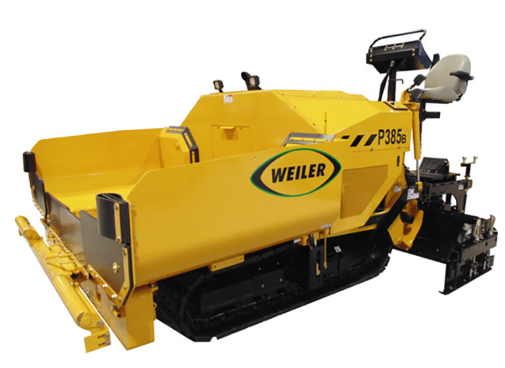
Weiler is the youngest brand on this list and one of the most interesting. Founded in 2000 in Knoxville, Iowa, it designs commercial pavers, material transfer vehicles, and road wideners, and it sells them exclusively through Cat dealers across North America and beyond.
That Cat dealer tie is Weiler's edge. You get a commercial-class paver built to complement the Cat lineup, plus the parts and service muscle of the largest dealer network in the business. The P385C and P285 are purpose-built for parking lots, driveways, and city streets.
Key features
- 3,700-pound front-mount screed: paves from 8 feet to 15 feet 8 inches and lays a strong mat across a wide range of jobs.
- Best-in-class undercarriage: runs 90 inches of track length for a smooth ride and good flotation.
- Three operating positions and dual control stations: give operators flexibility on every pass.
- Hydraulic generator: heats the screed at lower rpm to save fuel.
Pros
- Sold and serviced through Cat dealers, so parts are easy to get
- Rebuildable design with replaceable floor plates and track pads
- Strong commercial mat quality for lots and streets
Cons
- Commercial focus, not built for highway-class production
- Smaller model lineup than the legacy brands
- Younger brand with less long-term resale history
Pricing
New Weiler P385C pavers start at about $250,000, depending on configuration, with used machines available for much less.
Bottom line
Weiler is a smart commercial choice for contractors who already lean on a Cat dealer. You get a capable paver with support that's hard to match, as long as you don't need highway-class output.
11. HEM Paving: Best for Concrete Slipform Applications
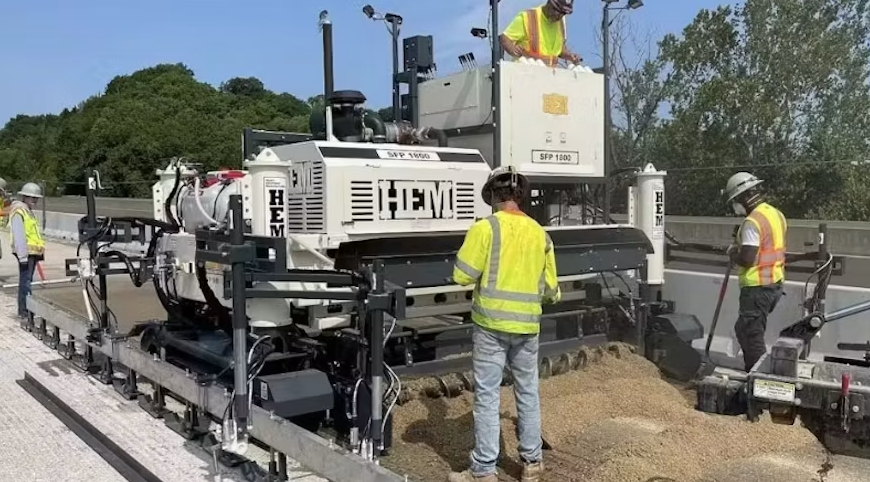
HEM specializes in concrete paving equipment: slipform pavers, form-riding machines, and overlay tools.
Unlike the asphalt-first brands on this list, HEM lives on the concrete side of pavement, and that focus is exactly why it belongs among the top paving equipment manufacturers for rigid pavement work.
HEM owns the concrete paving space because it does nothing else. Where other makers treat concrete as a side project, HEM builds machines specifically for slipform work, overlays, and rigid pavement.
Before you take on this kind of work, it helps to plan the pour carefully, and our construction project plan guide walks through sequencing a job from the ground up.
Key features
- Slipform and overlay pavers from 10- to 20-plus feet wide: cover most concrete applications.
- Modular frames: let you adjust width on the same machine, so one paver flexes across project types.
- Onboard vibrator and slope controls: deliver a uniform finish and proper consolidation through the pour.
- Hands-on training: helps asphalt crews new to concrete diversify their services.
Pros
- Best-in-class concrete paving machines
- Easier to operate and maintain than larger competitors
- Flexible configurations for different project types
Cons
- Concrete only, not usable for asphalt work
- Limited dealer reach compared with global brands
- Training needed for asphalt crews moving to concrete
Pricing
Basic HEM slipform pavers start around $190,000 or more.
Bottom line
HEM is the top name in concrete paving for overlays, slipform work, and municipal concrete roads. It's highly specialized, but it delivers where asphalt pavers can't.
12. XCMG: Best for Wide-Width Value Pavers
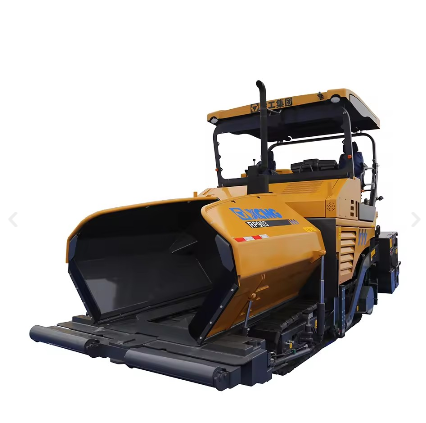
XCMG is one of the giants most North American contractors may have never bought from.
Founded in 1943 and headquartered in Xuzhou, China, it ranks among the top three construction equipment makers in the world and builds a deep RP-series paver line, from the compact RP355 up to the 11-meter RP1355HD.
XCMG earns its spot among global paving equipment manufacturers on scale and value. Its wide-width machines pave huge surfaces in one pass, and the pricing sits well below Western brands. The catch in North America is a thinner dealer and parts network.
Key features
- Serious paving width: the RP903 lays up to 8 meters and 440mm thick, and the RP1355HD forms an 11.25-meter surface in a single pass using 3D control.
- Full-hydraulic drive: runs independent left-and-right travel for stable wide-width work.
- Ultrasonic material sensing and auto-leveling: keep the mat even across big pours.
- Wireless remote control and color display: keep operation straightforward despite the machine's size.
Pros
- Strong value against Western brands
- Wide-width machines for large highway pours
- Backing of a top-three global manufacturer
Cons
- Thin North American dealer network
- Parts and service harder to source in the US
- Lower resale visibility in Western markets
Pricing
XCMG pavers price well below Western competitors. Wheel asphalt pavers cost around $57,000, with larger wide-width units running into the low hundreds of thousands.
Bottom line
XCMG makes sense for value-focused buyers who pave wide surfaces and can line up service. In regions with XCMG support, the price-to-capability ratio is hard to beat.
13. Sany: Best for Budget High-Output Paving
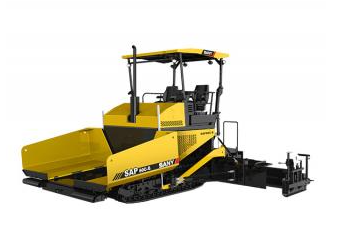
Sany rounds out the list as another Chinese heavyweight. Founded in 1989 and based in Changsha, it builds the SAP-series pavers, which led China's paver market for years running.
Sany belongs among the world's paving equipment manufacturers on volume and value. The SAP series moves serious tonnage, and the pricing makes it attractive in cost-sensitive markets. As with XCMG, the main question for North American buyers is local support.
Key features
- High-strength screed: built with a double-layer anti-twist beam for stable, even work.
- Anti-segregation material handling: fully proportional conveyor and auger controls match feed speed to paving speed.
- Wide, high-capacity SAP machines: pave up to 12 meters and move hundreds of tons per hour.
- Remote controller monitoring: lets support teams diagnose and update machines from a distance.
Pros
- Aggressive pricing for the output you get
- High-capacity wide pavers for big jobs
- Massive manufacturer with global ambitions
Cons
- Limited US dealer and parts network
- Resale value less established in Western markets
- Support depends heavily on region
Pricing
Sany’s pricing varies by model and market and generally undercuts Western brands. Sany's own catalog positions the SAP series as a high-efficiency, low-cost option.
Bottom line
Sany is a budget-friendly high-output option for contractors in markets with Sany support. The value is real, as long as you've confirmed parts and service before you buy.
Which Paving Equipment Manufacturer Should You Choose?
The right brand comes down to the work you actually bid, not the badge with the most prestige. Here's the short version:
- Choose a premium brand (CAT, Vögele, Wirtgen) if you run highway and DOT jobs where mat quality, uptime, and smoothness bonuses move real money. The high cost only pays back on big, high-stakes work.
- Choose a mid-tier or value brand (Volvo CE, Dynapac, BOMAG, Roadtec, Weiler) if you handle medium to large commercial work and want strong tech and support without top-tier pricing. This is where most growing contractors land.
- Choose a compact or specialist (LeeBoy, HEM, Ammann) if you live on parking lots and driveways, pour concrete, or want European versatility across sizes. Match the specialist to your niche and the value is obvious.
- Look at Chinese makers (XCMG, Sany) if you pave wide surfaces, watch the budget closely, and can confirm local parts and service. The price-to-capability is excellent where support exists.
Summing Up the Best Paving Equipment Manufacturers
Thirteen paving equipment manufacturers lead the global market in 2026, and each owns a different corner of it. CAT and Vögele rule highway and precision work. Volvo CE, Dynapac, BOMAG, Roadtec, and Weiler cover the broad commercial middle.
LeeBoy and HEM win on compact and concrete jobs, Ammann brings European range, and XCMG and Sany deliver scale and value out of China.
The smart move is to match the maker to your job mix and budget, then weigh the dealer support behind it. A cheaper machine with no nearby parts can cost more than a premium one that never sits idle.
Whichever of these paving equipment manufacturers you pick, the equipment is only half the equation. Running the jobs profitably is the other half, and that's where the right system earns its keep.
Run Estimates, Crews, and Jobs in One Place
The right equipment gets you on the job. What happens after that: the estimating, scheduling, invoicing, and crew coordination determines whether the job actually makes money. That's the side of the business OneCrew was built for.
It's a platform purpose-built for paving and concrete contractors that replaces the patchwork of spreadsheets, whiteboards, and disconnected apps slowing your office and field teams down. Here's what it covers:
- Build accurate job estimates in minutes: OneCrew's estimating tools let you price jobs from PDFs or aerial maps with built-in calculators for labor, materials, equipment, and subs.
- Schedule crews and dispatch faster: OneCrew's scheduling feature assigns crews and roles to specific job phases so your office and field stay aligned.
- Manage your field team from anywhere: The field management tools give crews their schedules, work orders, and GPS directions on their phones. Field workers can log time and capture job data in real time.
- Turn proposals around the same day: OneCrew's proposals feature lets you generate professional, branded proposals directly from your estimate. Customers can review, approve, and pay through a built-in client portal with no back-and-forth email threads.
- Track customer relationships without a separate CRM: OneCrew's CRM keeps your leads, conversations, and project history in one place.
- Invoice on time, every time: OneCrew's invoicing tools sync with QuickBooks so you can bill customers and collect payment without double-entry or chasing down paperwork.
No matter which paving equipment manufacturers you buy from, the machines only make money when your operation runs tight behind them. Book a free demo and see how OneCrew works.
FAQs
1. Who are the largest paving equipment manufacturers in the world?
The largest paving equipment manufacturers in the world are Caterpillar, the Wirtgen Group (Vögele, Hamm, Wirtgen), Volvo CE, the Fayat Group (Dynapac, BOMAG), and Ammann. Chinese makers XCMG and Sany rank among the biggest by volume.
2. How much does a new asphalt paver cost in 2026?
A new asphalt paver can cost between $100,000 and $500,000-plus in 2026. Compact pavers from LeeBoy and Ammann start near $100,000, and highway-class machines from CAT and Vögele run $400,000 to $600,000. Chinese brands like XCMG and Sany price lower still, and used machines sell for far less.
3. Which paving equipment manufacturer is best for highway work?
Caterpillar and Vögele are the best paving equipment manufacturers for highway work. CAT builds high-output machines like the AP1055 for multi-lane and DOT jobs, and Vögele leads on mat smoothness, which matters most on contracts that pay smoothness bonuses.
4. Are Chinese paving equipment manufacturers any good?
Yes, Chinese paving equipment manufacturers like XCMG and Sany build capable machines at lower prices than Western brands. The main trade-off in North America is a thinner dealer and parts network, which can mean longer waits when a machine goes down.
5. What is the difference between an asphalt paver and a concrete paver?
The main difference between an asphalt paver and a concrete paver is the material each one lays. Asphalt pavers place and screed hot mix from brands like CAT, Volvo, and LeeBoy. Concrete pavers use slipform or form-riding designs to pour rigid pavement, and specialists like HEM build machines for that work.