Jobber vs. Housecall Pro: I Tested Both for Contractors (2026)

After spending weeks comparing Jobber vs. Housecall Pro, testing scheduling, quoting, and invoicing across different contractor workflows, here's what I found (and where both fall short for project-based work):
Jobber is better for simple, route-heavy service businesses. Housecall Pro is better for service companies that want stronger built-in marketing and sales tools.
OneCrew is the better fit for project-based asphalt and concrete contractors who need estimating, crew scheduling, and project visibility in one place.
Jobber vs. Housecall Pro vs. OneCrew at a Glance
Here's a snapshot before we get into the details:
In sum, you should:
- Choose OneCrew if you run paving or concrete jobs that need estimating from plans, phased scheduling, crew coordination, and better project visibility.
- Choose Jobber if you run a service business with recurring or route-heavy work and want the easiest platform to learn.
- Choose Housecall Pro if you run a service business and want stronger marketing, automation, and financing tools.
Teams who run multi-day paving work usually need asphalt paving scheduling software that handles crews, phases, and equipment in one calendar.
Where Jobber and Housecall Pro Both Miss the Mark
If you've been reading this Jobber vs. Housecall Pro comparison and thinking “neither of these sounds like how I run my business,” you're probably a project-based contractor.
- Both platforms were built for service businesses. Think: a plumber who gets a call, drives to the house, fixes the pipe, invoices the customer, and moves on. That's the workflow Jobber and Housecall Pro optimize for.
- Paving contractors work differently. You estimate from site maps or PDF plans. You build bids with specific material quantities, labor rates, equipment costs, and subcontractor line items. You assign crews to job phases that stretch across days or weeks.
- You track whether a project is in pre-construction, production, or billing. And you need a customer portal where clients approve proposals, pay invoices, and share documents. This is everyday paving project management work, and it's where service platforms hit a wall.
Jobber and Housecall Pro don't support this kind of work. And forcing a service-based platform into a project-based workflow creates gaps that spreadsheets, whiteboards, and extra apps end up filling. That's where a purpose-built platform like OneCrew makes a difference.
A Closer Look at the Contenders
OneCrew: Best for project-based contractors
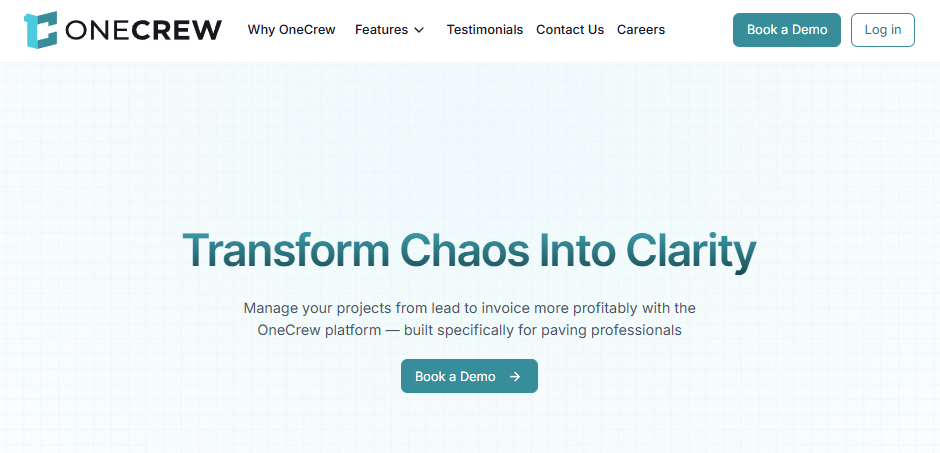
OneCrew is built for asphalt and concrete contractors who manage multi-phase jobs instead of single-stop service calls. It fits teams that need to estimate from PDFs or aerial maps, schedule crews and equipment across multiple phases, and track projects from pre-construction through billing.
Features and highlights
- Estimate from PDFs, site plans, or aerial maps
- Build bids with labor, material, equipment, and subcontractor line items
- Schedule crews and equipment across multiple phases
- Track project status from pre-construction to billing
- Keep customer communication, documents, and approvals in one place
Jobber: Best for straightforward service workflows
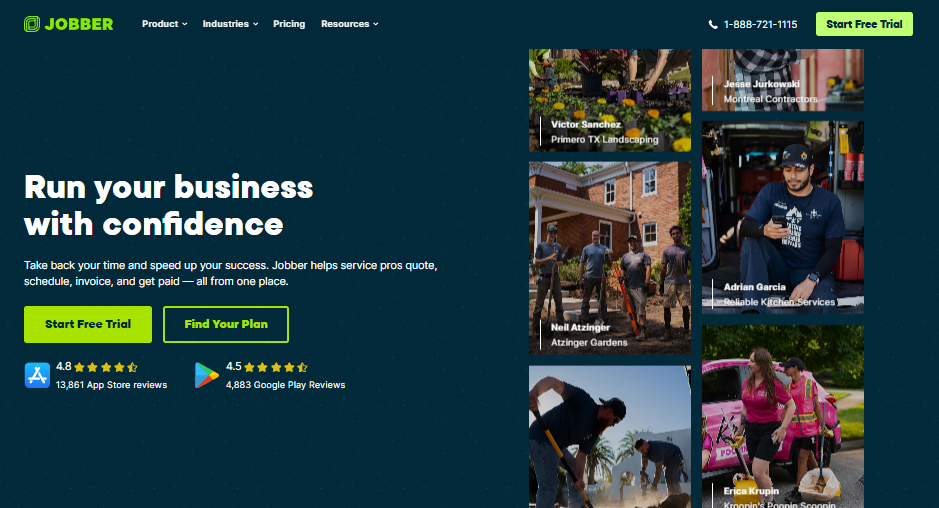
Jobber works best for contractors who handle fast-turn service jobs and want a clean, easy-to-use system. It keeps scheduling, quoting, invoicing, and client communication simple. Its biggest advantage is built-in route optimization, which helps teams with multiple stops per day cut down on drive time.
Features and highlights
- Drag-and-drop scheduling
- Built-in route optimization
- Online booking and digital quotes
- Batch invoicing and online payments
- Client Hub for self-service communication
Housecall Pro: Best for service businesses that want growth tools
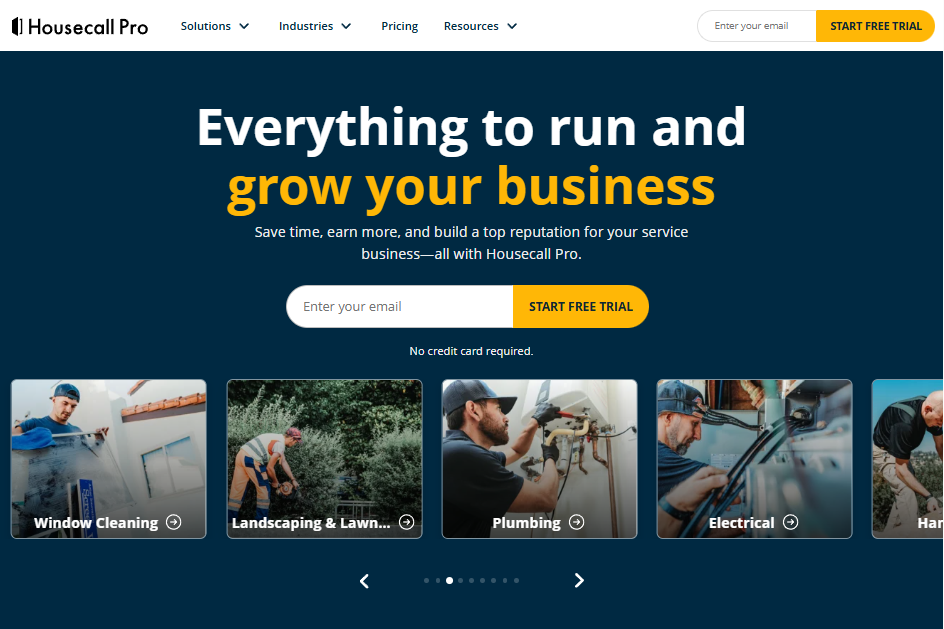
Housecall Pro covers the same core service workflow as Jobber, but it leans harder into sales and marketing. It gives service businesses more built-in tools for follow-ups, review requests, financing, and customer acquisition.
Features and highlights
- Drag-and-drop scheduling and dispatching
- Automated marketing and review requests
- Visual sales proposal tools on higher plans
- Instapay and financing options
- Stronger built-in reporting than many service platforms
Jobber vs. Housecall Pro vs. OneCrew: Feature Breakdown
Scheduling and dispatching
OneCrew
- Best for multi-day and multi-phase projects
- Lets you schedule crews, equipment, and job phases in one workflow
- Better fit for paving and concrete work than service-call scheduling
- Good option for contractors who need asphalt paving scheduling software
Jobber
- Best for route-heavy service businesses
- Built-in route optimization is a major advantage for teams running many stops per day
- Easy to use and quick to learn
- Less useful once jobs become multi-phase or stretch across several days
Housecall Pro
- Good dispatching for technician-based service teams
- Clean interface and solid day-to-day scheduling tools
- No native route optimization
- Still built around service calls, not project scheduling
Winner: OneCrew for project-based contractors. Jobber is the better choice if your business lives on route-heavy service calls.
Estimating and quoting
OneCrew
- Best fit for contractors who estimate from plans, maps, or takeoff-style inputs
- Supports more detailed bids with labor, material, equipment, and subcontractor breakdowns
- Better fit for larger paving and concrete proposals
- Stronger match for contractors who need quote details tied to real project execution
Jobber
- Fast and simple quoting
- Optional line items make upsells easy
- Great for flat-rate and service-style estimates
- Not built for blueprint-based or phased project estimating
Housecall Pro
- Strong for polished service proposals
- Visual sales proposal builder helps with good-better-best packages on higher plans
- Works well for HVAC, plumbing, and electrical sales workflows
- Still limited for project-based takeoffs and cost breakdowns
For bigger paving jobs, pair the approved quote with a signed asphalt paving contract before you mobilize. Optional line items also make it easy to quote add-ons like line striping equipment without rebuilding the estimate.
Winner: OneCrew. It is the only one here that fits how project-based contractors actually estimate work.
Invoicing and payments
OneCrew
- Keeps billing connected to the project workflow
- Better fit when invoicing follows project milestones or detailed scopes
- Helps keep customer records, proposals, and billing in one place
- Makes more sense when billing is one part of a larger project workflow
Jobber
- Strong invoicing for service businesses
- Supports online payments, batch invoicing, and automated follow-ups
- Great for recurring work and maintenance-style billing
- Less tailored to milestone-based project billing
Housecall Pro
- Strongest payment experience of the three for service businesses
- Instapay, mobile deposits, financing options, and automated reminders stand out
- Good fit for teams that want faster cash collection
- Still tied to service-style workflows
Winner: Housecall Pro for service businesses. OneCrew makes more sense when billing is tied to a larger project workflow.
Client management, marketing, and reporting
OneCrew
- Keeps project history, job communication, and approvals tied to the actual work
- Better fit for contractors who need visibility across long jobs and repeat commercial work
- Helps connect estimating, production, and billing
- Not trying to be a service-marketing engine
Jobber
- Clean client experience through Client Hub
- Strong communication basics with texts, emails, and job updates
- Good for teams that want simple CRM features without extra complexity
- Marketing features are more limited unless you add extra tools
Housecall Pro
- Strongest built-in marketing and growth tools
- Better for automated follow-ups, review requests, campaigns, and financing-driven sales
- Also offers stronger out-of-the-box reporting for service teams
- Still optimized for customer acquisition in service businesses, not project operations
Winner: Housecall Pro for service growth. OneCrew wins if your priority is managing project visibility instead of marketing automation.
Mobile and field usability
OneCrew
- Better fit for crews that need jobsite updates, production tracking, and project visibility in the field
- Supports the kind of field-to-office handoff project contractors deal with every day
- More aligned with longer jobs and phased execution
- Better fit for crews that need to keep safety and field documentation close at hand, including OSHA requirements for asphalt
Jobber
- Easy mobile experience for service teams
- Good for scheduling, invoicing, and communicating on the go
- Strong reputation for ease of use
- Still centered on service workflows
Housecall Pro
- Covers the core field tasks service technicians need
- Mobile app supports invoicing, scheduling, and dispatching
- Some users prefer desktop for more complex workflows
- Less reliable for contractors who need deep project visibility
Winner: Jobber for simple service work. OneCrew is the better fit for field teams working through multi-day projects.
Jobber vs. Housecall Pro: Pricing Compared
Pricing is one of the biggest factors in the Jobber vs. Housecall Pro decision, and both platforms use tiered plans that get expensive as your team grows. For OneCrew, you’ll need to request a quote. Here’s a quick look at pricing for these platforms:
Jobber pricing (2026)
Housecall Pro pricing (2026)
Housecall Pro also charges for popular add-ons: sales proposal tool ($40/month), GPS tracking ($20/vehicle/month), flat rate price book ($149/month), and recurring service plans ($40/month). These costs add up fast.
The real cost comparison
For a team of 5 users who need quoting, invoicing, QuickBooks integration, and scheduling:
- Jobber (Connect Team): $97/month (billed annually)
- Housecall Pro (Essentials): $149/month (billed annually)
Jobber typically costs less at every tier, and it includes features like route optimization that Housecall Pro charges extra for. But Housecall Pro packs more marketing tools into its higher plans, so the “better deal” depends on what you value most.
What Real Users are Saying
To keep this section grounded in real user feedback, I looked at recent reviews on G2 for OneCrew and Trustpilot for Jobber and Housecall Pro.
OneCrew
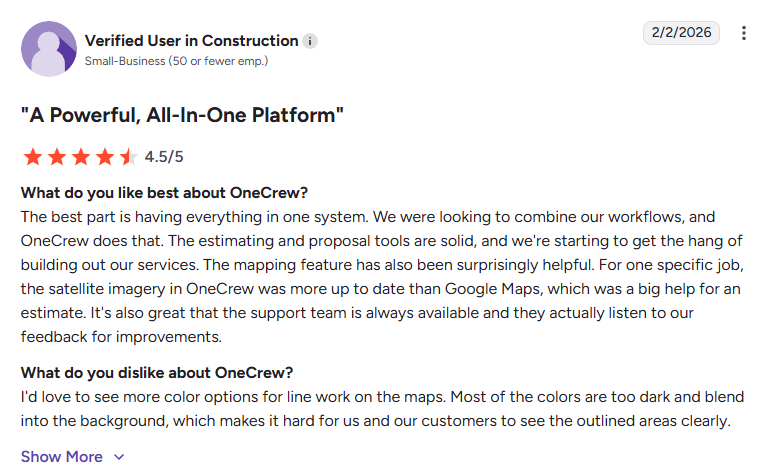
- Easy to use without forcing workflow changes: A G2 reviewer said OneCrew fit smoothly into their existing process and helped them stay organized across scheduling and job tracking without forcing them into rigid workflows. They also praised the platform’s customer support. (February 10, 2026)
- Strong estimating and analytics, with room to improve scheduling visibility: Another G2 reviewer said OneCrew stood out for industry-specific estimating, professional-looking quotes, and analytics that help track progress and profitability. They also said the scheduling tab could be easier to read at a glance on the calendar. (March 12, 2026)
Jobber
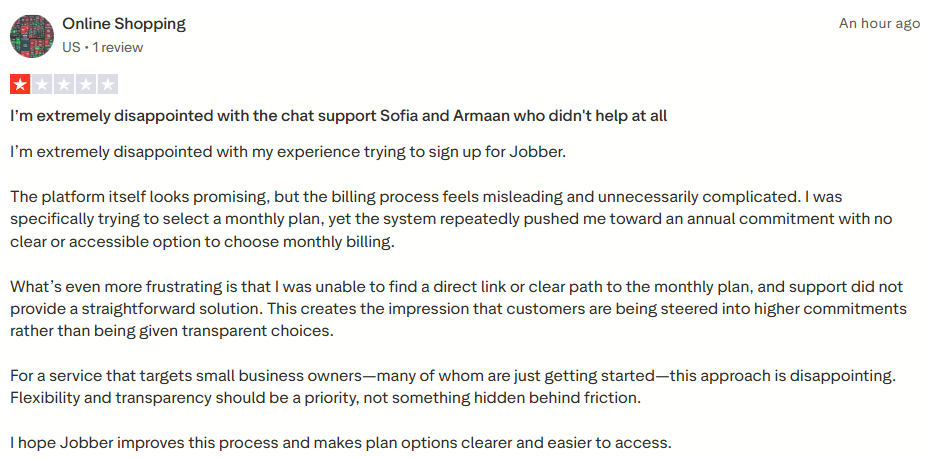
- Easy to use for small teams with responsive support: A reviewer on Trustpilot said Jobber was easy to use and more than enough for a small company’s needs.
They also praised the customer service for being responsive and professional. (March 11, 2026)
- Confusing plan pricing and frustrating downgrade options: Another reviewer on Trustpilot said Jobber’s pricing had become hard to understand, with too many plan variations and pressure to move into more expensive tiers.
They also said it was difficult to switch back to a more affordable plan after trying a higher-level option. (March 21, 2026)
Housecall Pro
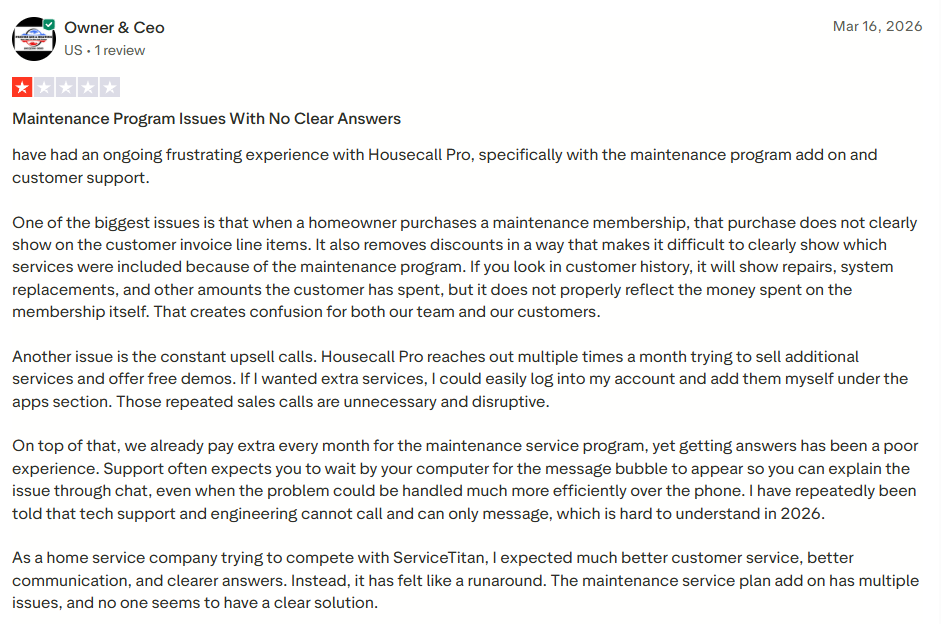
- Weak support when customers dispute charges: A Trustpilot reviewer said Housecall Pro did not do enough to support their business when customers disputed charges, even when the work had been authorized and completed.
They also said that experience made the platform feel unreliable when real revenue was at stake. (March 11, 2026)
- Payment policies that can create refund and trust issues: Another Trustpilot reviewer said Housecall Pro’s payment process felt unreliable because refunds could happen in ways that made the contractor look responsible, even when they were trying to collect payment for completed work.
They also said the platform’s approval requirements felt intrusive and created unnecessary tension with customers. (March 10, 2026)
Who Should Pick OneCrew?
OneCrew fits project-based asphalt and concrete contractors who need more than a basic service scheduling tool. You’ll get the most value from OneCrew if you:
- Run asphalt or concrete jobs that stretch across multiple days or phases
- Estimate from PDFs, aerial maps, or site plans instead of simple service quotes
- Build bids with labor, material, equipment, and subcontractor line items
- Assign crews and equipment across pre-construction, production, and billing phases
- Want project visibility from estimate to invoice, with customer communication and documents in one place
Unlike Jobber and Housecall Pro, which are built for technician-based service teams, OneCrew is designed for project-based contractors. If your work depends on multi-phase scheduling, detailed bid building, and tracking jobs from pre-construction through billing, OneCrew is the strongest fit in this comparison.
Who Should Pick Jobber?
Jobber fits service-oriented contractors who want a straightforward platform without a steep learning curve. You'll get the most value from Jobber if you:
- Run a small to mid-size crew (1–15 people) handling service calls like lawn care, cleaning, HVAC, or plumbing
- Need route optimization to reduce drive time across daily stops
- Want a clean, simple interface that your team can learn in a day
- Rely on recurring service jobs with quick scheduling and invoicing
- Prefer lower upfront costs and don't need heavy marketing automation
Jobber works best when your jobs follow a predictable pattern: get the call, quote it, schedule it, complete it, and invoice it. It handles that loop faster and more affordably than most competitors.
Jobber is designed for technician-based service work, not project-based construction. Jobber is not built for managing multi-phase projects, estimating from site plans or blueprints, or coordinating large crews across different job phases. Once paving season starts, multi-day jobs stack up and service-style scheduling gets messy fast.
Who Should Pick Housecall Pro?
Housecall Pro fits service businesses that prioritize marketing and customer acquisition alongside their daily operations. You'll get the most value if you:
- Run a service-based business (plumbing, electrical, HVAC, cleaning) and want built-in marketing tools
- Need visual sales proposals to upsell bigger packages on-site
- Want automated email campaigns, review requests, and follow-up sequences without third-party tools
- Have a growing team and value consumer financing options (Klarna and Wisetack integrations)
- Prefer same-day payouts through Instapay for tighter cash flow
Housecall Pro's strength is turning one-time service calls into repeat customers. Like Jobber, Housecall Pro was designed for service-style workflows, not project-based estimating, multi-crew scheduling across job phases, or detailed job costing with labor, material, and equipment breakdowns. If your work involves blueprints, takeoffs, or multi-week projects, you'll hit its limits fast.
Run Estimates, Crews, and Projects in One Place
When comparing Jobber vs. Housecall Pro vs. OneCrew, the real question is: how do you run your work? That's where OneCrew fits.
OneCrew was built for project-based asphalt and concrete contractors. It replaces the patchwork of apps and spreadsheets that slow you down and create blind spots where projects get lost in the handoff between estimating and production.
Here's what you can do with OneCrew:
- Estimate from PDFs or aerial maps using labor, material, equipment, and sub-line items: Built-in cost calculators and configurable automations help you build detailed bids faster, cutting estimating time by up to 80%.
- Schedule jobs and assign crews to specific phases with full visibility: Allocate teams and equipment across pre-construction, production, and billing phases; not just single-day service calls.
- Manage field operations in real time with updates from every job site: Crews can log materials used, track time, capture photos of completed work, and flag issues the moment they happen.
- Track customer relationships and job history from first contact to repeat business: Keep every conversation, quote, and project in one place.
- Send professional proposals that win more work and get approved faster: Create polished, branded proposals with detailed breakdowns that stand out from competitors. Customers can view, approve, and sign directly through a portal without back-and-forth emails.
- Invoice clients and collect payments without chasing paperwork: Sync financials with QuickBooks to keep billing organized without double-entry. Get paid faster with online payment options built into your customer portal.
Comparing Jobber vs. Housecall Pro makes sense if you're running a service business. But if you're running paving projects, you need a platform built for how you actually work. Book a free demo to see how OneCrew helps paving contractors take control of every project.
FAQs
1. Is Jobber or Housecall Pro better for small businesses?
Jobber is the better fit for most small service businesses because it costs less and includes route optimization on every team plan. The interface is simpler and easier for crews to learn.
2. Does Housecall Pro have route optimization?
No, Housecall Pro does not include built-in route optimization. You'll need a third-party integration to plan efficient routes for your technicians. Jobber includes route optimization natively, which maps the fastest route for your crew and adjusts when plans change.
3. Can I use Jobber or Housecall Pro for paving or concrete work?
Both platforms work for basic scheduling and invoicing, but they weren't designed for project-based contracting. Paving and concrete contractors typically need estimating from plans, multi-phase crew assignments, and detailed job costing, which neither Jobber nor Housecall Pro supports. Platforms like OneCrew are purpose-built for paving workflows.
4. How much does Jobber cost per month?
Jobber pricing starts at $19/month for the Core plan (1 user, billed annually). Team plans range from $97/month (Connect, 5 users, billed annually) to $344/month (Plus, 15 users, billed annually).
5. How much does Housecall Pro cost per month?
Housecall Pro starts at $59/month for the Basic plan (1 user, billed annually). The Essentials plan costs $149/month for up to 5 users (billed annually), and the MAX plan costs $299/month for up to 8 users (billed annually).