Industry Terminology in Asphalt Contracting: A Pro's Guide

Industry terminology in asphalt contracting is the standardized set of words and phrases professionals use to describe materials, pavement structures, distress conditions, and repair methods with precision. When everyone on a project speaks the same language, from the estimator to the crew foreman to the client, bids get compared accurately, repairs get specified correctly, and costly miscommunications disappear. Terminology misunderstanding is one of the most common sources of poor project outcomes in this industry. This guide gives paving contractors and project managers the vocabulary they need to work smarter.
What are the key asphalt materials and their industry terms?
“Asphaltic concrete” is the formal engineering term for what most people call hot mix asphalt (HMA) or blacktop. The word “concrete” here refers to a composite structure, not Portland cement. You’ll see “asphaltic concrete” in ASTM, AASHTO, and DOT specifications, so knowing it signals technical credibility when you’re reading plans or writing bids.
Here are the core material terms every paving professional should know:
- Asphalt / Bitumen / Asphalt cement: These terms overlap but aren’t identical. Asphalt cement is the refined petroleum binder. Bitumen is the broader term used internationally. Asphalt refers to the finished mix or the binder depending on context.
- Hot Mix Asphalt (HMA): The industry standard mix produced at high temperatures, combining aggregate and asphalt cement. Also called asphaltic concrete in formal specs.
- Aggregate: The crushed stone, gravel, or sand that forms the structural skeleton of any asphalt mix. Gradation (particle size distribution) determines mix performance.
- Tack coat: A thin asphalt emulsion applied between pavement lifts to bond layers together. Proper tack coats are critical for durable overlays. Without them, layers can slip against each other under traffic load.
- Sealcoating: A protective surface treatment applied over existing asphalt. Sealcoating shields pavement from UV rays, water infiltration, and chemical spills, extending service life when applied on a regular schedule.
- Emulsions: Water-based asphalt products used in tack coats, fog seals, and slurry seals. They cure by evaporation rather than cooling.
One term worth flagging: “tarmac.” Tarmac and asphalt are materially identical today. True coal-tar tarmac hasn’t been produced since the 1980s and 1990s. The word is still common in the UK and Ireland, but in North America, “asphalt” is the correct term.
Pro Tip: When reviewing a spec sheet or bid, check whether it references ASTM or AASHTO standards. A bid that cites specific mix designations, like ASTM D3515, signals a contractor who knows the formal paving industry vocabulary.
How do asphalt contractors describe pavement structure and layering?
Asphalt pavement is a layered system, and each layer has a specific name and function. Getting these terms right matters most when you’re comparing bids or planning a repair scope.
Milling is the mechanical removal of the surface course before an overlay. It restores grade and removes deteriorated material. Full-depth replacement means removing all asphalt and base layers down to the subgrade, which is the most expensive option but necessary when structural failure has occurred.
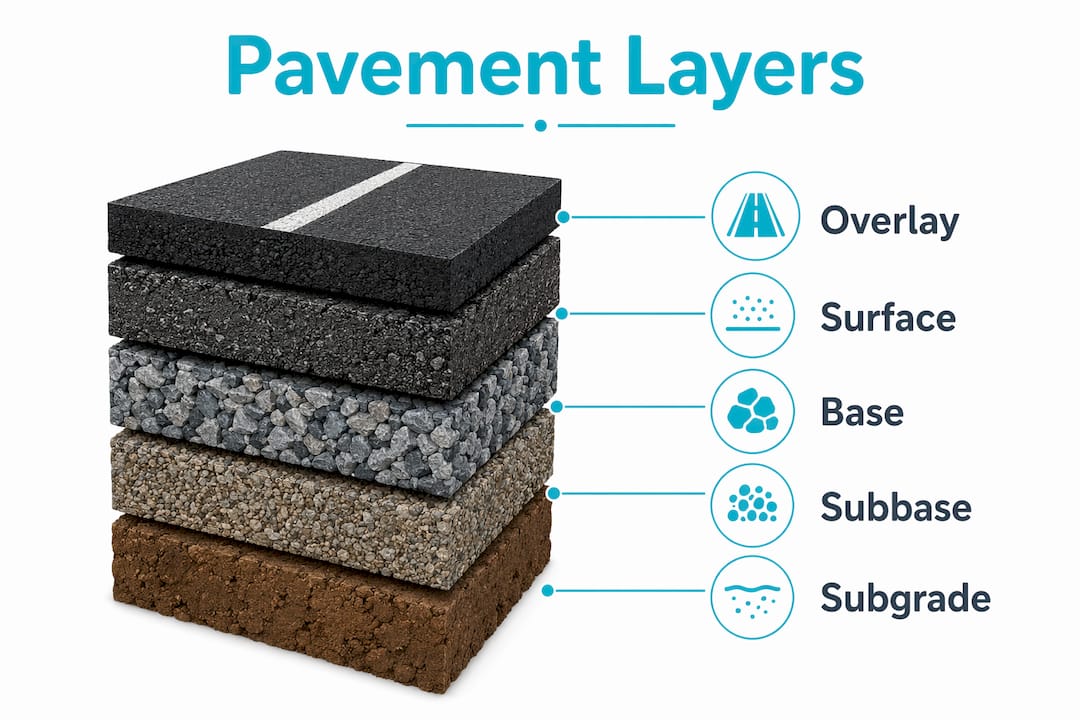
The most misunderstood term in paving proposals is thickness. Contractors quote thickness as either pre-compaction (loose) or post-compaction (finished), and the difference is significant. A 2-inch finished compacted layer starts as roughly 2.5 inches of loose material. Finished compacted thickness is what determines project quality, so always confirm which measurement a bid is referencing.
Pro Tip: Ask every contractor bidding your project: “Is that thickness pre-compaction or post-compaction?” If they can’t answer clearly, that’s a red flag. You can also review asphalt thickness calculations to verify whether a bid’s numbers make sense before you sign anything.
What terminology describes pavement distress and repair methods?
Pavement distress is classified into three categories: distortion, disintegration, and cracking. Each category contains specific conditions with their own names and corresponding repair methods. Knowing these terms lets you read a condition assessment report accurately and specify the right repair without overpaying.
Here are the most common distress terms and their definitions:
- Alligator cracking: Interconnected cracks forming a pattern resembling alligator skin. Caused by structural failure in the base or subgrade. Requires full-depth patching, not surface sealing.
- Rutting: Longitudinal depressions in wheel paths caused by mix instability or subgrade failure. Indicates a structural problem that sealcoating won’t fix.
- Raveling: Progressive loss of aggregate from the surface, starting at the edges. Usually caused by oxidized binder or poor compaction during placement.
- Potholes: Bowl-shaped holes resulting from advanced alligator cracking. Water enters cracks, weakens the base, and traffic breaks out chunks of pavement.
- Slippage cracks: Crescent-shaped cracks caused by a failed tack coat between layers. The surface course literally slips under braking or turning forces.
Pavement Condition Index (PCI) is the standardized scoring system for pavement health, rated 0 to 100 under ASTM D6433. A PCI above 85 calls for routine maintenance. A score below 40 signals the need for full reconstruction. Understanding PCI scores lets you prioritize repair budgets across multiple properties without guessing. You can dig deeper into how professionals apply these scores with a pavement condition assessment framework.
How to interpret asphalt terms in bids and project communication
Knowing the vocabulary is one thing. Applying it when you’re comparing three bids with different scopes is where it pays off. Paving proposals vary widely due to differences in scope, experience, equipment, and location. The lowest price rarely reflects the best value, and terminology is often where the gaps hide.
Watch for these red flags when reviewing bids:
- A bid specifying unusually thick asphalt without a corresponding price increase. This often means the thickness is quoted pre-compaction, not finished.
- Vague repair descriptions like “patch as needed” without specifying full-depth vs. surface patching.
- No mention of tack coat between layers on overlay work.
- “Sealcoating” listed as a fix for alligator cracking or rutting. Sealcoating is a maintenance treatment, not a structural repair.
Clear communication also means asking the right questions. Before approving any scope, confirm whether overlay thickness is pre or post-compaction, what mix designation is being used, and whether the base is being addressed or just the surface. Proactive maintenance programs cost far less than reactive repairs over a pavement’s lifecycle That math only works if you’re scheduling the right treatments at the right time, which requires understanding what each treatment actually does.
Asphalt makes up about 90% of U.S. parking lots and lasts 20 to 30 years with proper maintenance. That lifespan depends on catching distress early, specifying the correct repair, and working with contractors who use precise language. A solid asphalt maintenance schedule built around accurate terminology is the most direct path to protecting that investment.
Key takeaways
Mastering asphalt contracting terms directly reduces bid errors, repair mismatches, and budget overruns across every project you manage.
How OneCrew helps you put the right terms to work
Knowing the right terminology is only half the job. The other half is making sure it shows up consistently in your estimates, schedules, and invoices. OneCrew is built specifically for asphalt paving contractors, and every part of the platform reflects how this industry actually works.
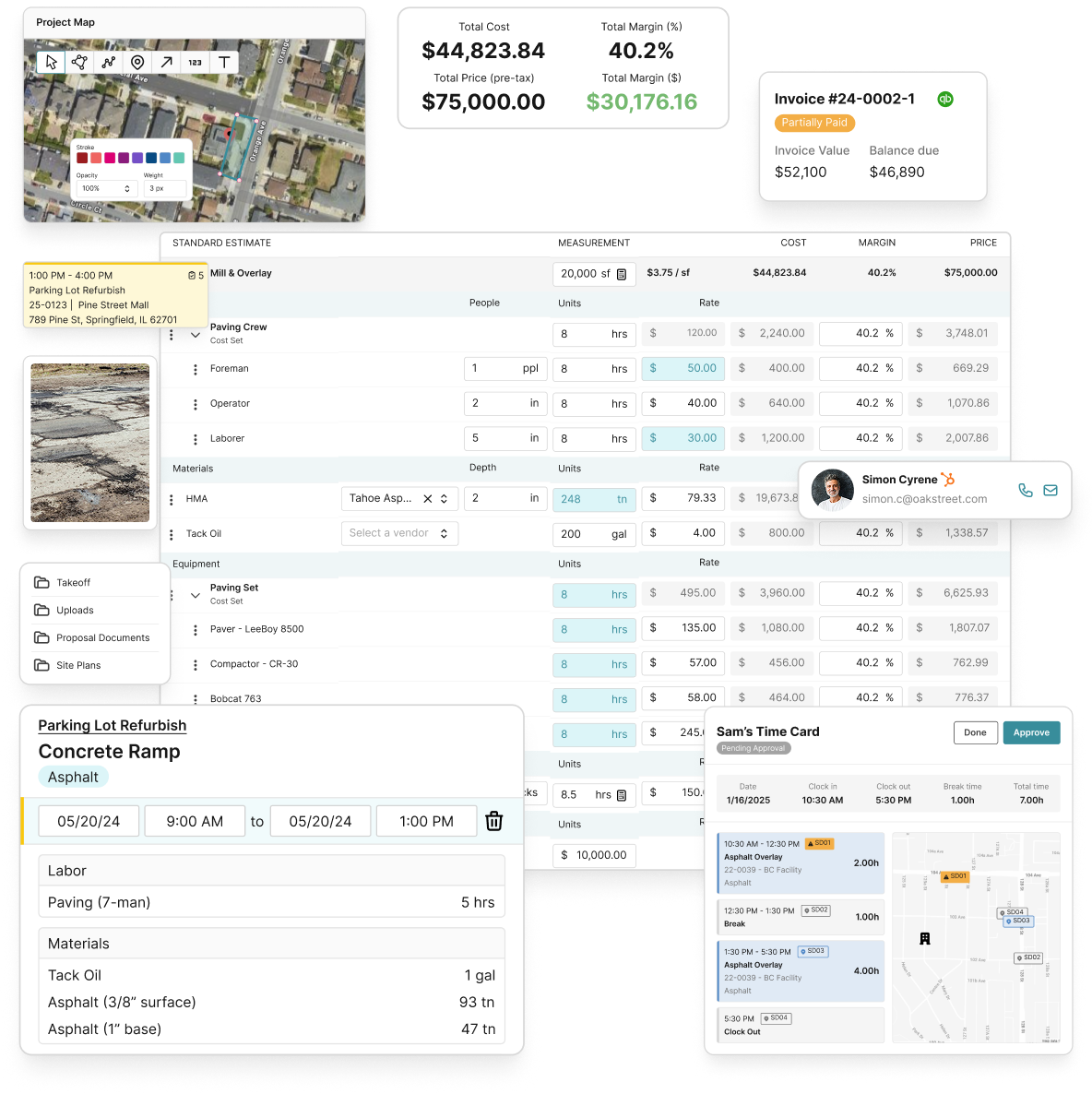
With OneCrew’s paving estimating software, you build bids using the correct material designations, layer specifications, and repair methods from the start. That means fewer back-and-forth calls with clients and fewer disputes over scope. The scheduling tools keep maintenance cycles and repair timelines organized so proactive work actually gets done on time. And construction invoicing ties the final paperwork back to the original scope, so every line item matches what was agreed. If you want one place where your terminology, your bids, and your operations all line up, OneCrew is worth a look. Book a demo to see it in action.
FAQ
What is the difference between asphalt and asphaltic concrete?
Asphalt refers to the petroleum binder or the finished pavement surface depending on context. Asphaltic concrete is the formal engineering term for hot mix asphalt, used in ASTM and DOT specifications to describe the composite mix of aggregate and asphalt cement.
Why does thickness measurement matter in paving bids?
Contractors quote thickness as either pre-compaction (loose material) or post-compaction (finished layer). A 2-inch finished layer starts as roughly 2.5 inches loose, so a bid quoting pre-compaction thickness delivers less actual pavement than it appears.
What is a PCI score in asphalt contracting?
PCI stands for Pavement Condition Index, scored 0 to 100 under ASTM D6433. A score above 85 calls for routine maintenance. A score below 40 indicates the pavement needs full reconstruction.
What is the difference between crack sealing and crack filling?
Crack sealing uses flexible sealant for working cracks that expand and contract with temperature. Crack filling uses rigid material for stable, non-working cracks. Crack sealing costs more but provides longer-lasting results.
What does tack coat mean in paving projects?
A tack coat is a thin asphalt emulsion applied between pavement layers to bond them together. Without a proper tack coat, the surface course can slip under traffic load, causing crescent-shaped slippage cracks.